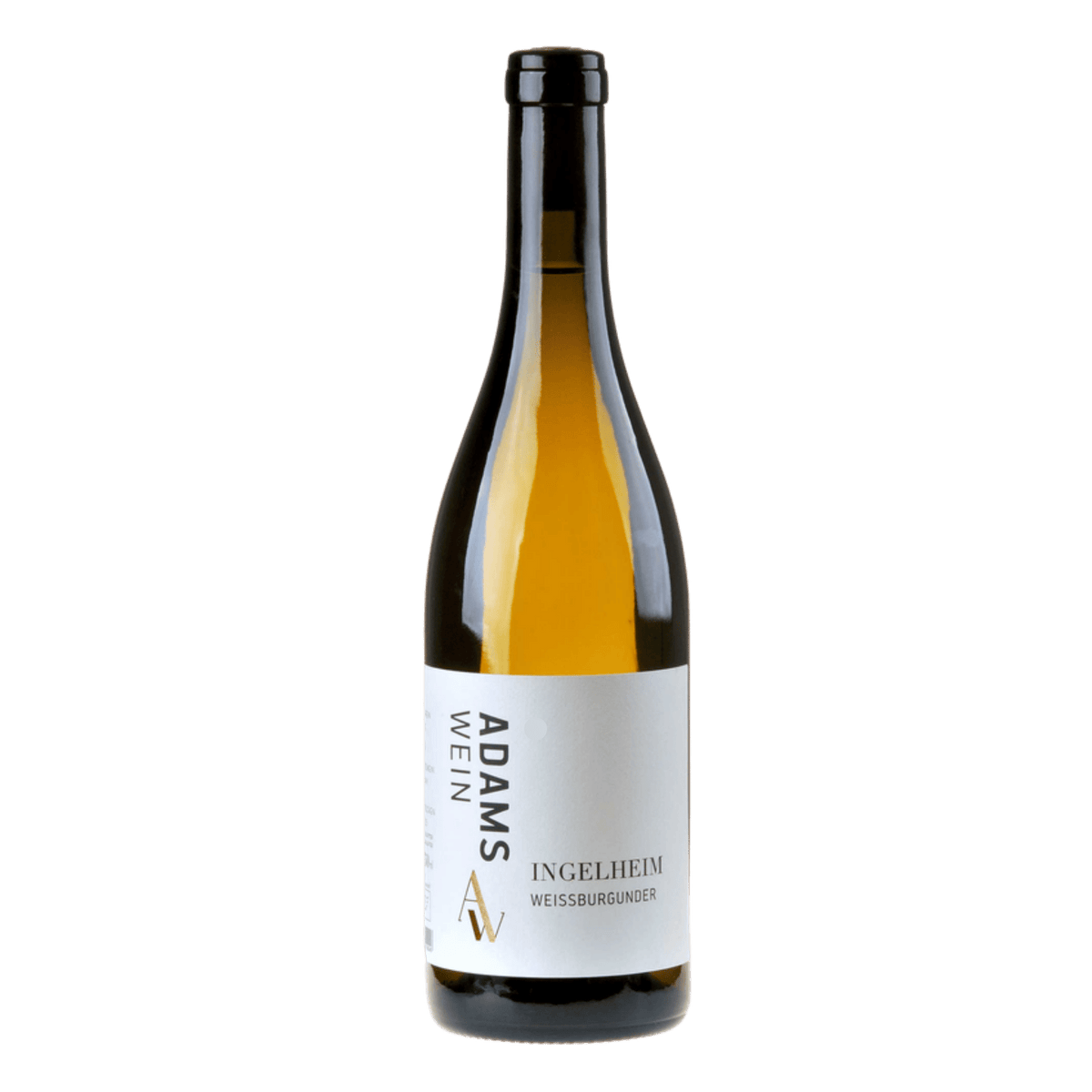
Adams Ingelheim
AdamsWein Ingelheim Weissburgunder 2024
AdamsWein Ingelheim Weissburgunder 2024
Couldn't load pickup availability
Description
Description
AdamsWein Ingelheim Weissburgunder is a bright, terroir-driven white from Rheinhessen, made from Pinot Blanc, known locally as Weissburgunder.
AdamsWein is run by Simone Adams, who returned to her family's small estate in Ingelheim am Rhein to farm its vineyards biodynamically, championing the limestone soils of Rheinhessen that she believes are underrated among Germany's white wine terroirs. Rheinhessen is Germany's largest wine region, a rolling landscape of hills along the Rhine where a mix of loess, limestone and clay soils supports a new generation of growers producing precise, dry-style whites.
This is a clean, food-friendly white built for versatility, equally at home as an aperitif or alongside lighter seafood and vegetable dishes.
*Every effort is made to ensure the current vintage is accurate; however, variations can occur. If you are after a specific vintage, please contact us prior to ordering.
Wine Details
Wine Details
Type: White Wine
Style: Dry, light to medium-bodied white
Grape Varietal: 100% Weissburgunder (Pinot Blanc)
Tastes Like: A dry Pinot Blanc, comparable to a fresh white from Alsace or Alto Adige made from the same grape
Alcohol Percentage: 12.5%
Closure: Natural cork
Size: 750mL
Appellation: Rheinhessen, Germany
Region: Ingelheim am Rhein, Rheinhessen, Germany
Terroir: Estate vineyards around Ingelheim on Tertiary limestone soils
Serving Temperature: 8-10°C
Winery
Winery
AdamsWein is a small family estate in Ingelheim am Rhein, in the north of Rheinhessen, on the Rhine west of Mainz. Dr Simone Adams, who holds a doctorate in oenology, took over the family vineyards after her father died in 2010 and now farms about 10 hectares, planted only to the Burgundian grapes: Spätburgunder (Pinot Noir), Chardonnay, Weissburgunder (Pinot Blanc) and Grauburgunder (Pinot Gris). Ingelheim has a very long red wine history, and local tradition credits Charlemagne, whose imperial palace stood in the town, with having vines brought from Burgundy. The soils are Tertiary limestone, and the slopes never went through the land consolidation that reshaped most German vineyards, so the old small parcels survive. The estate has been farmed biodynamically and regeneratively since 2020 and the grapes are picked by hand. In the cellar the wines ferment with their own yeasts, the reds partly or fully with their stems, then rest on their lees, mostly in wooden casks, and are bottled without fining or filtration.
Weissburgunder is the German name for Pinot Blanc, one of the four Burgundian grapes that are all Simone Adams grows. Hers is picked by hand from the estate's limestone slopes around Ingelheim, fermented with its own yeasts and bottled dry, a white made for the table rather than for show. It is the bottle to open with a simple lunch or a weeknight dinner.
Food Pairings
Food Pairings
Starter: Asparagus with ham and a light vinaigrette
Poultry: Chicken in a creamy mushroom sauce with rice
Fish: Pan-fried whiting with brown butter and parsley potatoes
Vegetarian: Leek and potato gratin
Cheese Pairings
Cheese Pairings
Handkäse: The tangy sour-milk cheese of Rheinhessen and Hesse, traditionally eaten with onions and caraway
Butterkäse: A mild, supple German cheese that lets a delicate white lead
Comté: Nutty and gently sweet, a good match for the wine's soft texture
Chaource: A creamy, slightly tangy cheese from the Champagne-Burgundy border, freshened by the wine's acidity
Recipe
Recipe
Hühnerfrikassee (German Chicken Fricassee)
Ingredients (Serves 4):
- 1 whole chicken (about 1.6kg), or 1.2kg chicken thighs and breasts on the bone
- 1 onion, halved
- 1 carrot and 1 celery stick, roughly chopped
- 1 bay leaf and 5 peppercorns
- 40g butter
- 3 tbsp plain flour
- 200g button mushrooms, quartered
- 150g asparagus, cut into 3cm pieces
- 150g frozen peas
- 125mL pouring cream
- 1 egg yolk
- 1 tbsp lemon juice
- 1 tsp capers (optional)
- Steamed rice and chopped parsley, to serve
Instructions:
- Put the chicken, onion, carrot, celery, bay leaf and peppercorns in a large pot, cover with about 2 litres of cold water and add 2 tsp salt.
- Bring slowly to the boil, skim, then simmer gently for 1 hour until the chicken is cooked through.
- Lift out the chicken, strain and reserve the stock. When cool enough, pull the meat into bite-sized pieces, discarding skin and bones.
- Melt the butter in a large saucepan, stir in the flour and cook for 2 minutes without colouring. Whisk in 750mL of the hot stock a little at a time to make a smooth sauce.
- Add the mushrooms and asparagus and simmer for 5 minutes, then add the peas and chicken and warm through for 3 minutes.
- Whisk the cream with the egg yolk, stir into the pan off the heat, then season with lemon juice, salt and white pepper. Add capers if using.
- Serve over rice, scattered with parsley.
Hühnerfrikassee is a German family classic, chicken simmered in its own stock and finished with a creamy, lemony sauce. A dry Weissburgunder has the same gentle, rounded character as the dish, with enough freshness to lift the cream, and it is the natural white for Sunday chicken in the Rhine country.