Balthasar Ress
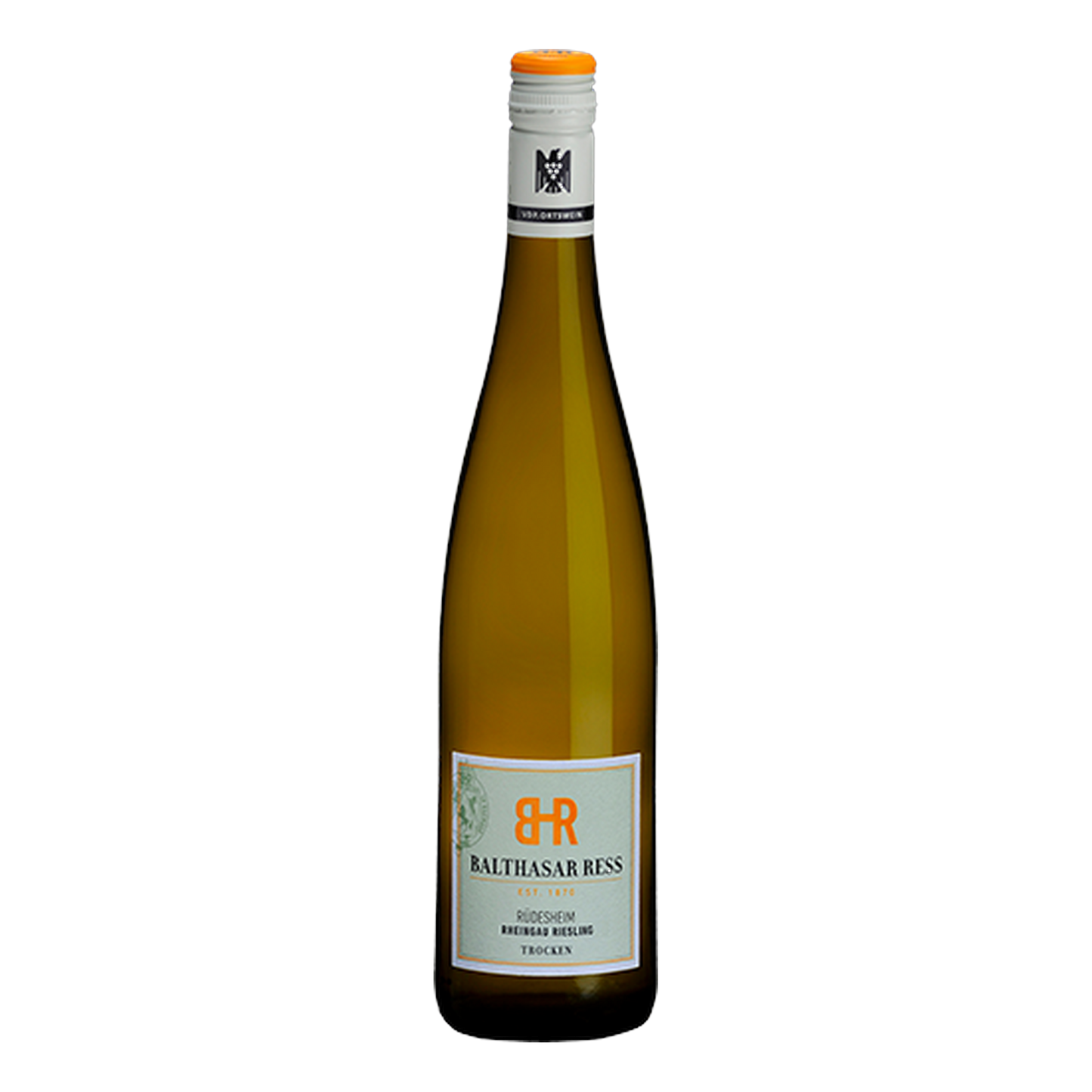
Balthasar Ress Rüdesheim Riesling QBA Trocken 2023
Balthasar Ress Rüdesheim Riesling QBA Trocken 2023
This incredible drop is from our South Australia warehouse - please allow 7-10 days for dispatch. It's well worth the wait!
If your order includes wine from a different warehouse, everything is shipped together once this item is ready.
Couldn't load pickup availability
Description
Description
Balthasar Ress Rüdesheim Riesling QBA Trocken is a dry Riesling from the steep slate and quartzite slopes at the western end of Germany's Rheingau.
Rüdesheim am Rhein sits at the point where the river narrows and swings north into the gorge, and the vineyards of the Rüdesheimer Berg above the town are among the steepest and stoniest in the Rheingau. Where much of the region rests on deeper loess and marl, here the slopes are thin, hard slate and quartzite, terraced and largely worked by hand. Riesling accounts for the overwhelming majority of plantings across the Rheingau, a region that has treated the grape as its birthright since the eighteenth century. Balthasar Ress is a family house based downriver at Hattenheim, with holdings spread across the region's better sites, and QbA Trocken indicates a dry wine.
Serve well chilled as an aperitif, or with oysters, sushi and simply cooked seafood.
*Every effort is made to ensure the current vintage is accurate; however, variations can occur. If you are after a specific vintage, please contact us prior to ordering.
Wine Details
Wine Details
Type: White Wine
Style: Dry (trocken)
Grape Varietal: Riesling
Tastes Like: A dry Rheingau village Riesling
Alcohol Percentage: 13%
Closure: Screwcap
Size: 750mL
Appellation: Rheingau Qualitätswein trocken (Germany's quality-wine category for wines from one of its 13 wine regions, here fully dry); VDP.Ortswein (the village tier, the second of the VDP's four tiers: a wine from classified vineyards around one village)
Region: Rüdesheim am Rhein, Rheingau, Germany
Terroir: The estate's vineyards around Rüdesheim, at the western end of the Rheingau where the Rhine turns north into its gorge
Aging: Fermented with natural yeasts
Serving Temperature: 9-11°C
Winery
Winery
Weingut Balthasar Ress was founded in 1870 in Hattenheim, in the heart of the Rheingau, when Balthasar Ress opened the Gasthof Ress, an inn in the village. It has stayed in the family ever since and is now in its fifth generation, run by Stefan and Christian Ress, with Christian managing the estate since 2010. A member since 1989 of the VDP, Germany's association of leading wine estates, Ress farms about 39 hectares, almost all Riesling with a little Spätburgunder (Pinot Noir), in Hattenheim, Hallgarten, Oestrich, Rüdesheim and Assmannshausen; about 70 per cent of that land is classified Erste Lage or Grosse Lage. The estate began converting to organic farming in 2016 and its vineyards are now certified organic.
Rüdesheim sits at the western end of the Rheingau, where the Rhine narrows and turns north into its gorge, and the steep slopes of the Rüdesheimer Berg above the town are among the region's best-known vineyards. Ress farms vineyards here as well as around its home village of Hattenheim, and this village Riesling, a VDP.Ortswein, brings together grapes from its Rüdesheim sites. Like all the estate's wines from village level up, it ferments with its own yeasts, and it is made fully dry. Open it beside the estate's Hattenheim wines to taste how the far west of the Rheingau differs.
Food Pairings
Food Pairings
Seafood: Freshly shucked oysters with shallot vinegar
Japanese: Sushi and sashimi with pickled ginger
Fish: Grilled whiting with herb butter and lemon
Vegetarian: Mushroom and leek tart with a green salad
Cheese Pairings
Cheese Pairings
Allgäuer Bergkäse (aged): A firm, nutty mountain cheese from the Allgäu, home of the recipe; a dry Riesling's acidity lifts it
Harzer Käse: A tangy, low-fat sour-milk cheese from the Harz mountains; it needs a wine with sharp acidity, which a dry Rheingau Riesling has
Raclette: The Alpine melting cheese, mild and creamy, easy with a fresh dry white
Recipe
Recipe
Allgäuer Krautkrapfen (Allgäu Sauerkraut and Bacon Noodle Rolls)
Ingredients (Serves 4):
- For the dough: 300 g plain flour, 2 eggs, 80 mL water, 1 tbsp oil and a pinch of salt
- 500 g sauerkraut, drained and squeezed
- 150 g speck or smoked bacon, finely diced
- 1 onion, finely chopped
- 2 tbsp butter or lard, plus 2 tbsp for the pan
- 1 tsp caraway seeds
- 300 mL hot beef or vegetable stock
- Salt and black pepper
- Sour cream and chopped chives, to serve
Instructions:
- Knead the flour, eggs, water, oil and salt into a smooth, firm dough. Cover and rest for 30 minutes.
- Fry the bacon and onion in the butter until golden, add the sauerkraut and caraway and cook for 10 minutes. Season and leave to cool.
- Roll the dough out on a floured cloth into a thin rectangle, about 40 x 50 cm.
- Spread the sauerkraut filling evenly over the dough, leaving a border, and roll it up tightly from the long side. Cut into slices about 5 cm thick.
- Melt the remaining butter in a large frying pan with a lid. Stand the slices in the pan, cut side down, and fry for 5 minutes until the bottoms are golden.
- Pour the hot stock around them, cover and cook over low heat for 20-25 minutes until the stock is absorbed and the bases are crisp again. Serve with sour cream and chives.
Krautkrapfen are a farmhouse dish of the Allgäu, in the far south of Germany: a thin noodle dough rolled up with sauerkraut and bacon, then cooked in the pan until the tops are tender and the bases crisp. The sour cabbage, smoky bacon and buttery crust want a dry, fresh white, and a Rüdesheim village Riesling cuts the richness while meeting the sauerkraut's tang.