Château du Cèdre
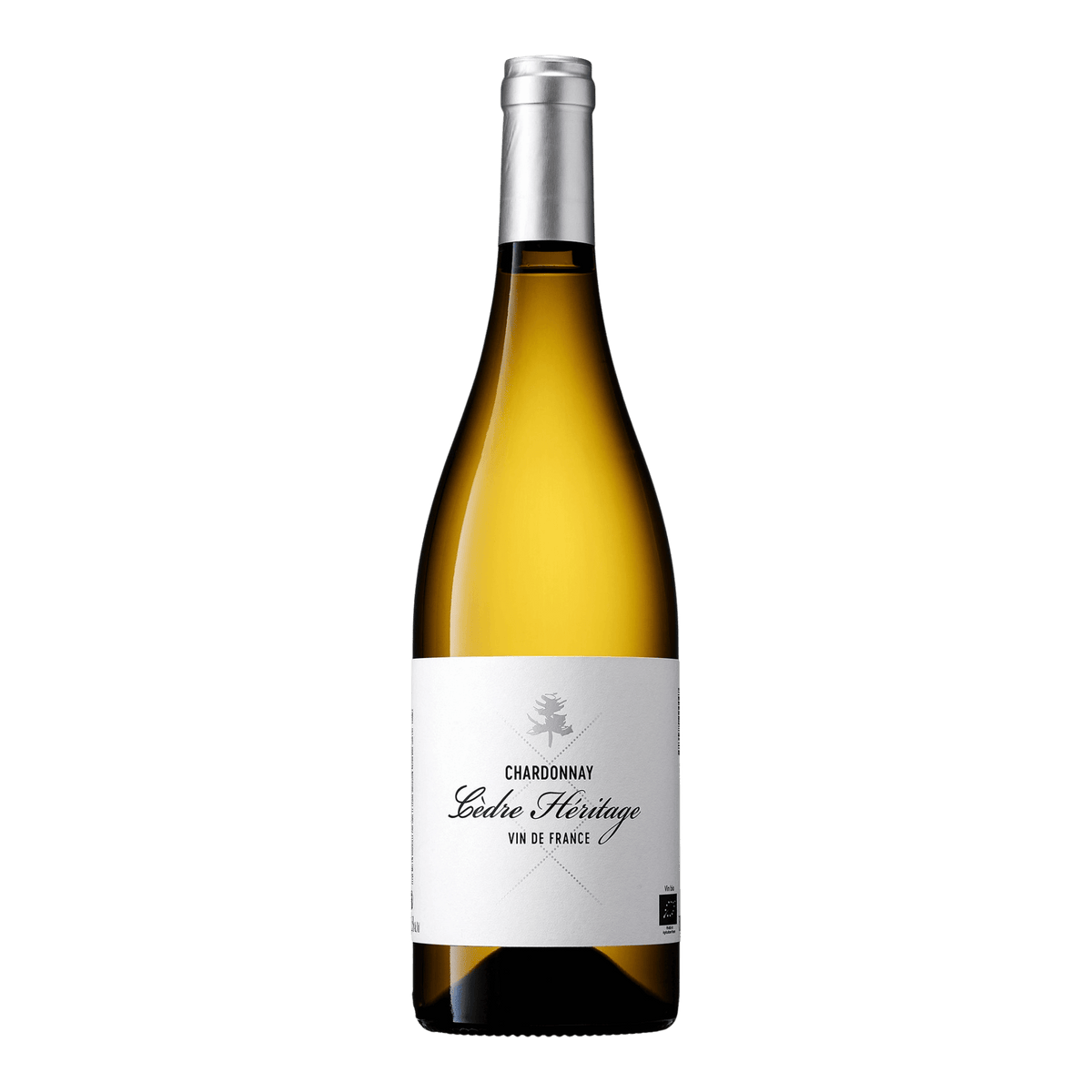
Château du Cèdre Héritage Chardonnay Vin de France 2024
Château du Cèdre Héritage Chardonnay Vin de France 2024
Couldn't load pickup availability
Description
Description
Château du Cèdre Héritage Chardonnay is the estate's white counterpart to its Cahors reds, made from Chardonnay grown in the Lot valley and bottled as Vin de France.
Cahors lies on the river Lot upstream of Bordeaux and is the historic home of Malbec, known locally as Côt or Auxerrois. Château du Cèdre is at Vire-sur-Lot at the warm western end of the valley, where the Verhaeghe family farm around thirty certified organic hectares split between the gravel terraces above the river and the limestone causse of the plateau above. Work there is parcel by parcel, with ambient yeast, long macerations and a light hand with sulphur. Chardonnay has no place in the red-only Cahors appellation, so the estate's white is released as Vin de France. It is picked early to keep acidity, pressed whole bunch and fermented cool, with lees work to build a little texture rather than obvious oak.
A dry, moderately weighted white for roast chicken, river fish and soft cheeses; serve at 10 to 12 degrees.
*Every effort is made to ensure the current vintage is accurate; however, variations can occur. If you are after a specific vintage, please contact us prior to ordering.
Wine Details
Wine Details
Type: White Wine
Style: Dry, unoaked
Grape Varietal: Chardonnay
Tastes Like: An unoaked French Chardonnay, in the style of a white Mâcon
Size: 750mL
Appellation: Vin de France (France's broadest wine category, with no region named on the label; Chardonnay is not allowed in the Cahors appellation, which is for red wine only)
Region: Lot, South-West France
Terroir: Vines 15-30 years old on limestone (according to the Australian importer)
Aging: Whole bunches pressed, slow fermentation with natural yeasts, then eight months on fine lees in stainless steel; no oak
Serving Temperature: 10-12°C
Winery
Winery
Château du Cèdre is a family estate at Vire-sur-Lot, at the western end of the Cahors appellation in south-west France. The Verhaeghe family's story there began in 1914, when Léon Verhaeghe left Flanders for the Lot. In 1958 his son Charles and Charles's wife Marie-Thérèse, whose family farmed at Vire-sur-Lot, planted their first hectare of vines beside their lavender fields, and the estate dates its founding to its first bottling in 1973. Their sons Pascal, who runs the cellar, and Jean-Marc, who runs the vineyards, came back to the estate in the late 1980s, and Pascal's sons Jules and Robin now work alongside them. The vineyards have been certified organic since 2012 and sit on what the family calls the two best soil types of the appellation: the Grèzes, a cone of limestone scree on the slopes of Bru, and the high, ancient Mindel terraces of rolled pebbles and iron-rich red sand over clay. In the cellar, fermentations start on the grapes' own yeasts, nothing is added while the wines age, and they rest on their full lees in 500-litre barrels and large oak casks, with only a light dose of sulphur at bottling.
Héritage Chardonnay sits outside the estate's Cahors range. Chardonnay has no place in the Cahors appellation, which only allows red wine, so it is bottled as Vin de France. According to the Australian importer, the grapes come from vines 15 to 30 years old on limestone; they are pressed as whole bunches and fermented slowly with natural yeasts, and the wine then rests for eight months on its fine lees in stainless steel, without any oak. It is a fresh, simple white from a house known for its dark reds, and an easy bottle to open with lunch or a weeknight fish supper.
Food Pairings
Food Pairings
Starters: Salt cod and potato croquettes with aioli
Fish: Baked snapper with lemon, thyme and new potatoes
Poultry: Roast chicken with tarragon butter
Vegetarian: Leek and goat's cheese tart
Cheese Pairings
Cheese Pairings
Rocamadour: The small, soft goat's cheese of the Lot, made a short drive from Cahors; its fresh tang suits an unoaked white
Cabécou: The everyday name for the region's little goat's cheeses, mild and creamy, a natural local match
Comté (12 months): A firm, nutty mountain cheese whose richness is lifted by the wine's freshness
Recipe
Recipe
Estofinado (Stockfish with Potatoes, Eggs and Walnut Oil)
Ingredients (Serves 4):
- 400 g stockfish (dried cod) or thick salt cod
- 800 g floury potatoes, peeled and quartered
- 4 garlic cloves, finely chopped
- 1 small bunch flat-leaf parsley, chopped
- 3 eggs
- 125 mL walnut oil, plus extra to serve
- 125 mL thickened cream or milk, warmed
- Black pepper
Instructions:
- Soak stockfish in cold water for 4-5 days in the fridge, changing the water each day (soak salt cod for 24-36 hours, changing the water 3-4 times).
- Put the fish in a pan of fresh cold water, bring to a bare simmer and poach for 15 minutes. Drain, then remove skin and bones and flake the flesh.
- Boil the potatoes in unsalted water until tender, drain well and break them up roughly with a fork.
- In a heavy pan over low heat, mix the fish and potatoes with the garlic and parsley. Beat the eggs and stir them in for a minute or two until they just thicken the mixture.
- Pour in the walnut oil in a thin stream, stirring, then loosen with the warm cream. The mixture should be coarse and creamy, not smooth.
- Season with pepper (taste before adding salt) and serve hot, with a little extra walnut oil over the top.
Estofinado is the great dish of Figeac and the Lot valley, upstream from Cahors, said to have arrived with the river boatmen who carried wine down to Bordeaux and brought dried Norwegian cod back up the Lot. The walnut oil, garlic and egg make it rich and savoury, and an unoaked, fresh Chardonnay cuts through the potato and oil while the gentle fish stays centre stage.