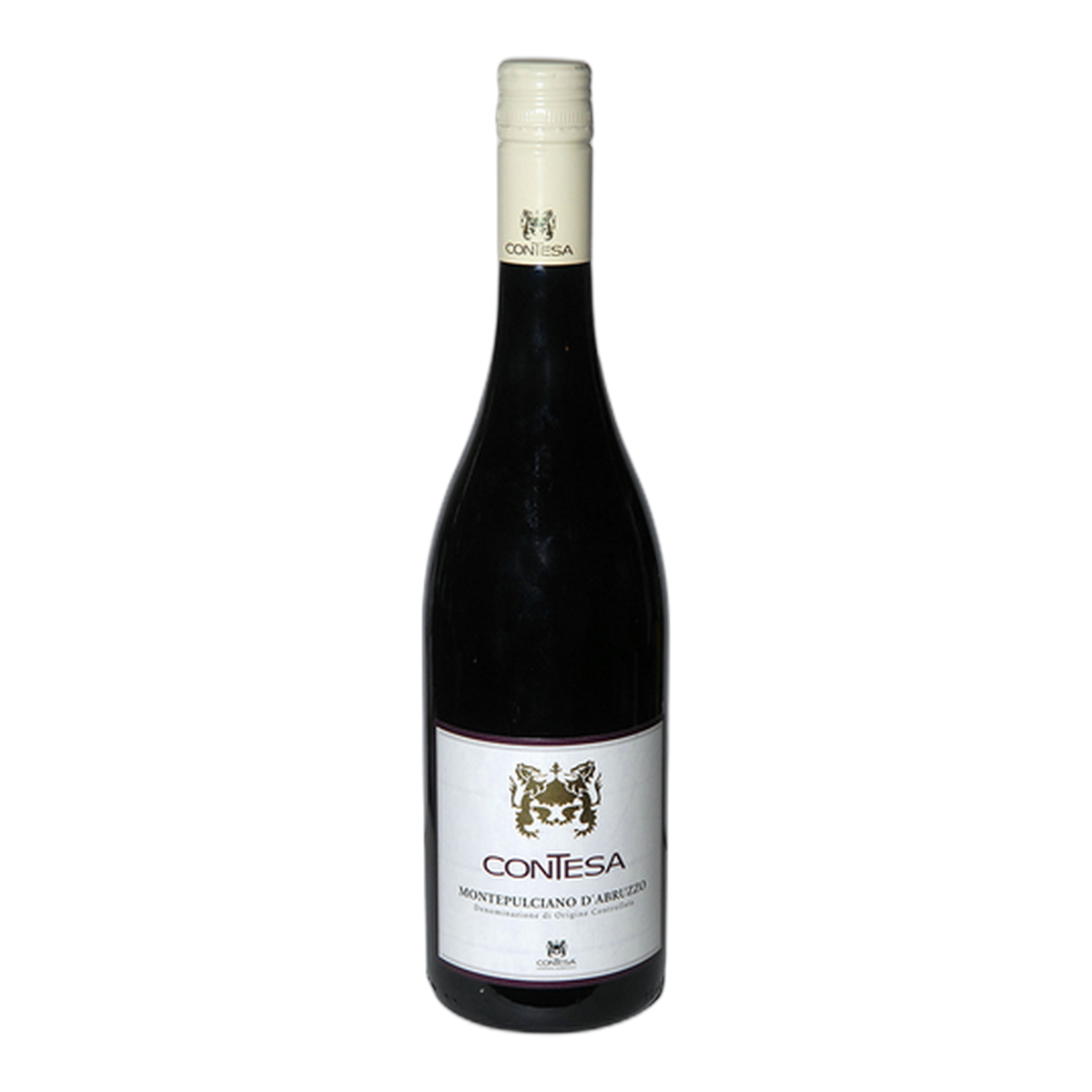
Contesa
Contesa Montepulciano d'Abruzzo 2024
Contesa Montepulciano d'Abruzzo 2024
Couldn't load pickup availability
Description
Description
Contesa Montepulciano d'Abruzzo is a red from the hills of central Abruzzo.
Montepulciano is Abruzzo's own grape, unrelated to the Tuscan town of the same name, and it produces deeply coloured reds with soft tannins on the slopes between the Apennines and the Adriatic. The region's combination of mountain altitude and sea air gives a long, even ripening season. The wine is fermented in stainless steel and aged briefly in oak.
Serve at 16 degrees with grilled meats, pizza or a tomato-based pasta. Drink within six years.
*Every effort is made to ensure the current vintage is accurate; however, variations can occur. If you are after a specific vintage, please contact us prior to ordering.
Wine Details
Wine Details
Type: Red Wine
Style: Medium to full-bodied, dry
Grape Varietal: Montepulciano
Tastes Like: A Montepulciano d'Abruzzo matured in large oak casks, similar in weight to a Rosso di Montalcino or a Côtes du Rhône Villages
Size: 750mL
Appellation: Montepulciano d'Abruzzo DOC (Denominazione di Origine Controllata: Italy's controlled designation of origin, which sets the permitted area, grapes and winemaking rules. Montepulciano d'Abruzzo covers the hill country of all four provinces of Abruzzo, and the wine must be made at least 85% from the Montepulciano grape, which is native to the region and unrelated to the Tuscan town of the same name)
Region: Collecorvino, province of Pescara, Abruzzo, Italy
Terroir: South-facing slopes of clay and chalk at around 250 metres above sea level, in the hills north-west of Pescara
Aging: Picked towards the end of October, fermented in stainless steel with 8 to 12 days on the skins and regular pump-overs, then matured in large 30-hectolitre casks of Slavonian oak and rested in bottle before release
Serving Temperature: 16-18°C
Winery
Winery
Contesa is the Pasetti family's estate at Collecorvino, in the hills north-west of Pescara, one of the best vineyard areas in Abruzzo. Rocco Pasetti runs the estate, with his son Franco, also a winemaker, working alongside him. The vineyards lie on south-facing slopes of clay and chalk at around 250 metres above sea level, with Montepulciano on the slopes around the winery and Pecorino on the lower ground, and the cellar, completed in 2004, is built into the hillside. Contesa farms under SQNPI, Italy's certified integrated production scheme, and is converting to organic farming.
This is Contesa's Montepulciano d'Abruzzo, made from the best plots of Montepulciano on the estate at Collecorvino. The grapes are picked late, towards the end of October, and fermented in stainless steel with 8 to 12 days on the skins. The wine then matures in large 30-hectolitre casks of Slavonian oak, which add little oak character, and rests in bottle before release. A red for pork, grilled meats and pasta with meat sauces.
Food Pairings
Food Pairings
Pork: Roast pork belly with crackling, or pork and fennel sausages with braised lentils
Beef: Grilled scotch fillet with rosemary potatoes
Pasta: Lasagne al forno with a meat ragù
Vegetarian: Eggplant baked with tomato, basil and mozzarella
Cheese Pairings
Cheese Pairings
Pecorino di Farindola: Raw ewe's milk cheese from Farindola on the Gran Sasso slopes, in the same province of Pescara as Contesa, and unusual for being made with pig's rennet
Caciocavallo abruzzese (aged): Stretched-curd cow's milk cheese hung in pairs to mature, firm and savoury after several months
Scamorza affumicata: Smoked stretched-curd cow's milk cheese, grilled until it just melts
Parmigiano Reggiano: Savoury and crystalline, enough weight for a cask-aged red
Recipe
Recipe
'Ndocca 'Ndocca (Teramo Slow-Cooked Pork Stew)
Ingredients (Serves 4):
- 1.2 kg mixed pork cuts: 2 pig's trotters, split, 500 g pork spare ribs and 300 g pork tail or rind (add a pig's ear if your butcher has one), cut into small pieces by your butcher
- 3 bay leaves
- 1 tsp black peppercorns
- 1 to 2 small dried chillies
- Salt
- Crusty bread, to serve
Instructions:
- Check the trotters, tail and rind for any hairs and singe them off over a gas flame. Rinse all the pork, put it in a large bowl of cold water and soak for 2 to 3 hours, changing the water once or twice.
- Drain the pork and put it in a heavy stainless steel or enamelled pot (not aluminium). Add just enough cold water to cover.
- Bring slowly to the boil and skim off all the foam that rises. Add the bay leaves, peppercorns and chilli.
- Reduce the heat, partly cover and simmer very gently for 4 to 4 1/2 hours, until the meat comes away from the bones and the broth is rich and sticky. Skim off fat from time to time and season with salt towards the end.
- Serve hot in bowls with plenty of broth and bread. Alternatively, pour into a dish, cool and refrigerate overnight so the broth sets into a jelly, and serve cold in slices.
- Traditionally, pig's blood is boiled until firm, cut into cubes and stirred into the stew just before it comes off the heat; it is left out here as it is hard to buy.
'Ndocca 'ndocca takes its name from the dialect verb 'ndoccare, to cut into small pieces. It is a winter dish of the Teramo countryside, made after the family pig was killed, using the trotters, ears, tail, ribs and rind that were too good to waste, and it kept farmers and shepherds going through the cold months. Contesa's cask-aged Montepulciano has the tannin and body to meet the richness of slow-cooked pork, hot or set in its jelly.