Domaine Disznoko
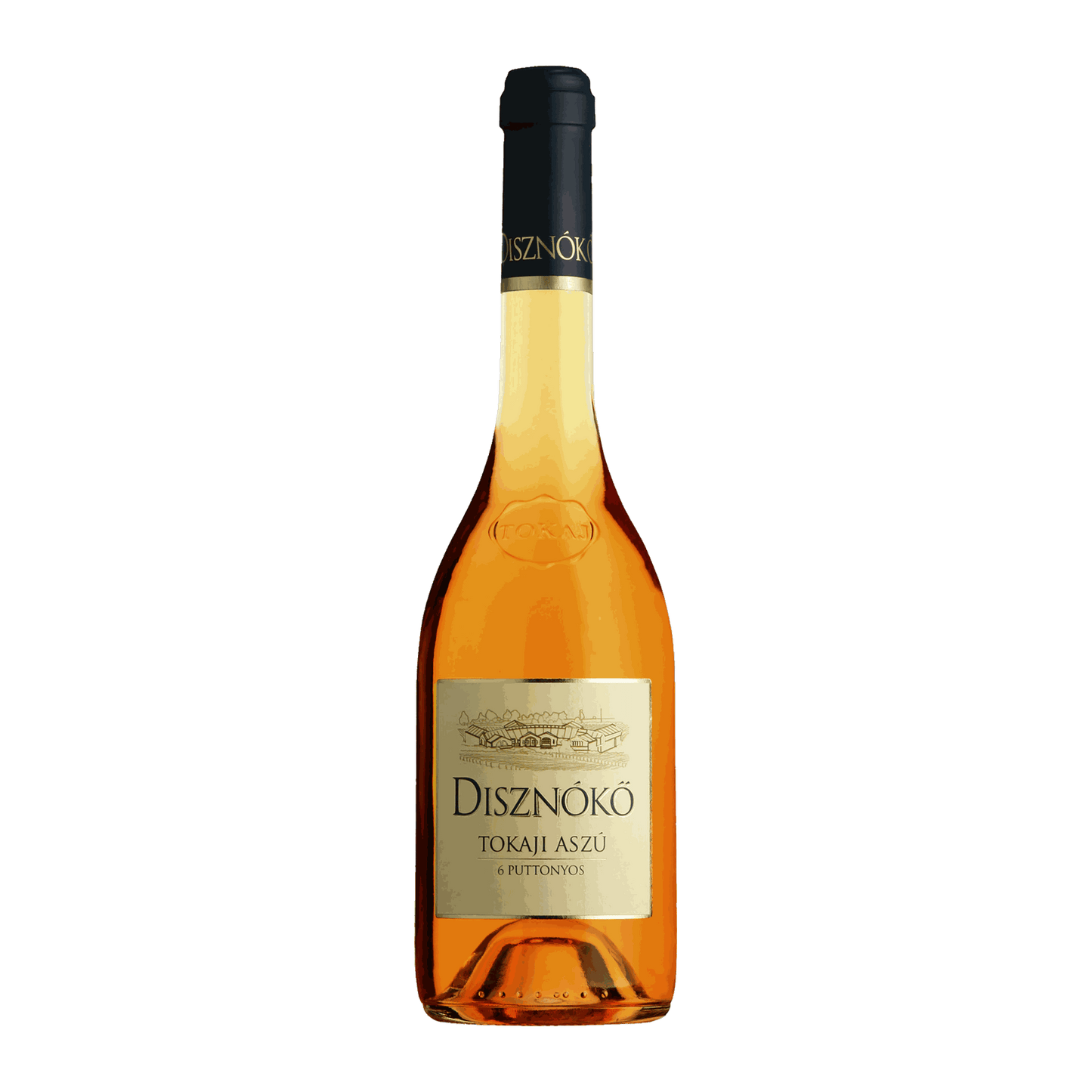
Disznókő Tokaji Aszú 6 Puttonyos 500ml 2017
Disznókő Tokaji Aszú 6 Puttonyos 500ml 2017
Couldn't load pickup availability
Description
Description
Disznókő Tokaji Aszú 6 Puttonyos is a botrytised sweet wine from Tokaj, made by the traditional aszú method and bottled with 187 grams per litre of residual sugar.
Tokaj, in north-eastern Hungary, owes its aszú wines to autumn mists off the Bodrog and Tisza rivers, which encourage noble rot on Furmint, Hárslevelű and the region's other varieties. Botrytised berries are picked individually and added in measured proportions to a base wine or must, the shrivelled fruit swelling enough to be pressed effectively. The traditional puttony was a hod for carrying grapes; today the classification rests on residual sugar, with six puttonyos requiring at least 150 grams per litre. Disznókő sits on the south-western edge of the region on volcanic soils. Its aszú berries here were 100 per cent Furmint, gently crushed and macerated in a base of Furmint and Hárslevelű. Fermentation in stainless steel ran until mid-December, and the wine then spent two years in 225-litre oak barrels, 17 per cent of them new Hungarian oak.
It will keep for decades but is already balanced; serve at 8-10C with foie gras, blue cheese or a simple apricot tart.
*Every effort is made to ensure the current vintage is accurate; however, variations can occur. If you are after a specific vintage, please contact us prior to ordering.
Wine Details
Wine Details
Type: Sweet Wine
Style: Rich, sweet, botrytised
Grape Varietal: Furmint-led
Tastes Like: Comparable to a top Sauternes in richness
Closure: Cork
Size: 500mL
Appellation: Tokaji Aszú, Tokaj protected designation of origin (PDO), the EU-protected name for wine grown and made inside the legally defined Tokaj region of north-eastern Hungary. Aszú is Tokaj's great sweet style: berries shrivelled by noble rot are picked one by one and steeped in fermenting must or wine. Since the 2013 vintage every Aszú must carry at least 120 grams per litre of residual sugar; a 6 puttonyos label means at least 150.
Region: Tokaj, north-eastern Hungary
Terroir: Single block of 107 hectares at Mezőzombor, on the south and west slopes of three small volcanic hills; mostly clay over rhyolite and rhyolite tuff; autumn mists from the Bodrog and Tisza rivers
Aging: Fermented in steel or barrel until early December, then two years in 225-litre oak barrels, a small share new; blended March 2019, bottled March 2020
Serving Temperature: 11 to 13°C
Winery
Winery
Disznókő means Wild Boar Stone, after a large volcanic rock in the vineyard, and the vineyard is first recorded in writing in 1413. When the vineyards of Tokaj were ranked in 1732, Disznókő was placed among the first growths, and five years later a royal decree set down the boundaries of the Tokaj region. Since 1992 the estate has belonged to AXA Millésimes, which replanted the vineyard and built a new winery in 1995. Its 107 hectares of vines lie in a single block at Mezőzombor, in the warm south of the region, on the south and west slopes of three small volcanic hills where the soil is mostly clay over rhyolite and rhyolite tuff. In autumn, mists rising from the Bodrog and Tisza rivers bring on noble rot, while the Zemplén Mountains shelter the slopes from the north.
The producer calls 2017 a great vintage: an early-ripening year with intense noble rot on fully ripe grapes. Each batch was made separately. Most of the aszú berries were soaked whole for two days in fermenting must, the rest lightly crushed and left on their skins for 12 hours, and fermentation ran into early December. The wine then spent two years in 225-litre barrels before blending in March 2019 and bottling a year later. Once opened, it keeps for a week or more in the fridge.
Food Pairings
Food Pairings
Desserts: Sponge dumplings with chocolate and cream, apricot soufflé or bread and butter pudding
Savoury: Seared goose or duck liver with caramelised apple
Fruit: Fresh apricots or a plate of dried figs and dates
Baking: Walnut and honey cake
Cheese Pairings
Cheese Pairings
Roquefort: The saltiest of blues meets a wine with sweetness to spare
Stilton: Rich and creamy, it softens the wine's concentration
Aged Gouda: Butterscotch notes in the cheese echo the wine's barrel age
Juhtúró: A crumbly Hungarian sheep's cheese for a salty, local contrast
Recipe
Recipe
Somlói Galuska (Somló Sponge Trifle)
Created in Budapest in the 20th century and named after the Somló hill, this trifle of three sponges, rum syrup, walnuts and chocolate sauce is on almost every Hungarian dessert menu.
Ingredients:
- For the sponges: 6 eggs, separated, 150 g caster sugar, 150 g plain flour, 1 tsp baking powder, 2 tbsp cocoa, 40 g walnuts, finely ground
- For the syrup: 150 g caster sugar, 200 mL water, zest of 1 orange, 60 mL dark rum
- For the custard: 400 mL milk, 4 egg yolks, 80 g caster sugar, 2 tbsp cornflour, 1 tsp vanilla extract
- 100 g walnuts, chopped, 80 g raisins, 300 mL thickened cream, whipped
- For the chocolate sauce: 100 g dark chocolate, 150 mL pouring cream
Method:
- Beat the yolks and sugar until pale, whisk the whites to firm peaks and fold together with the flour and baking powder. Divide into three: leave one plain, fold cocoa into the second and ground walnuts into the third. Bake each in a lined tray at 180°C for 12 to 15 minutes.
- Simmer the sugar, water and orange zest for 5 minutes, cool, then add the rum.
- Make the custard: heat the milk, whisk yolks, sugar and cornflour, pour on the milk, return to the pan and stir until thick. Add vanilla and cool.
- In a deep dish, layer the walnut sponge, soak with syrup, spread with custard and scatter with walnuts and raisins. Repeat with the cocoa sponge, then the plain sponge. Chill overnight.
- To serve, scoop out portions with a large spoon, top with whipped cream and pour over warm chocolate sauce made by melting the chocolate into the hot cream.
Why it works: Somlói galuska is soaked in sweet syrup and finished with chocolate, so it needs a wine at the top of the sweetness scale. A 6 puttonyos Aszú has that richness, and its acidity keeps the cream and custard from tiring the palate.