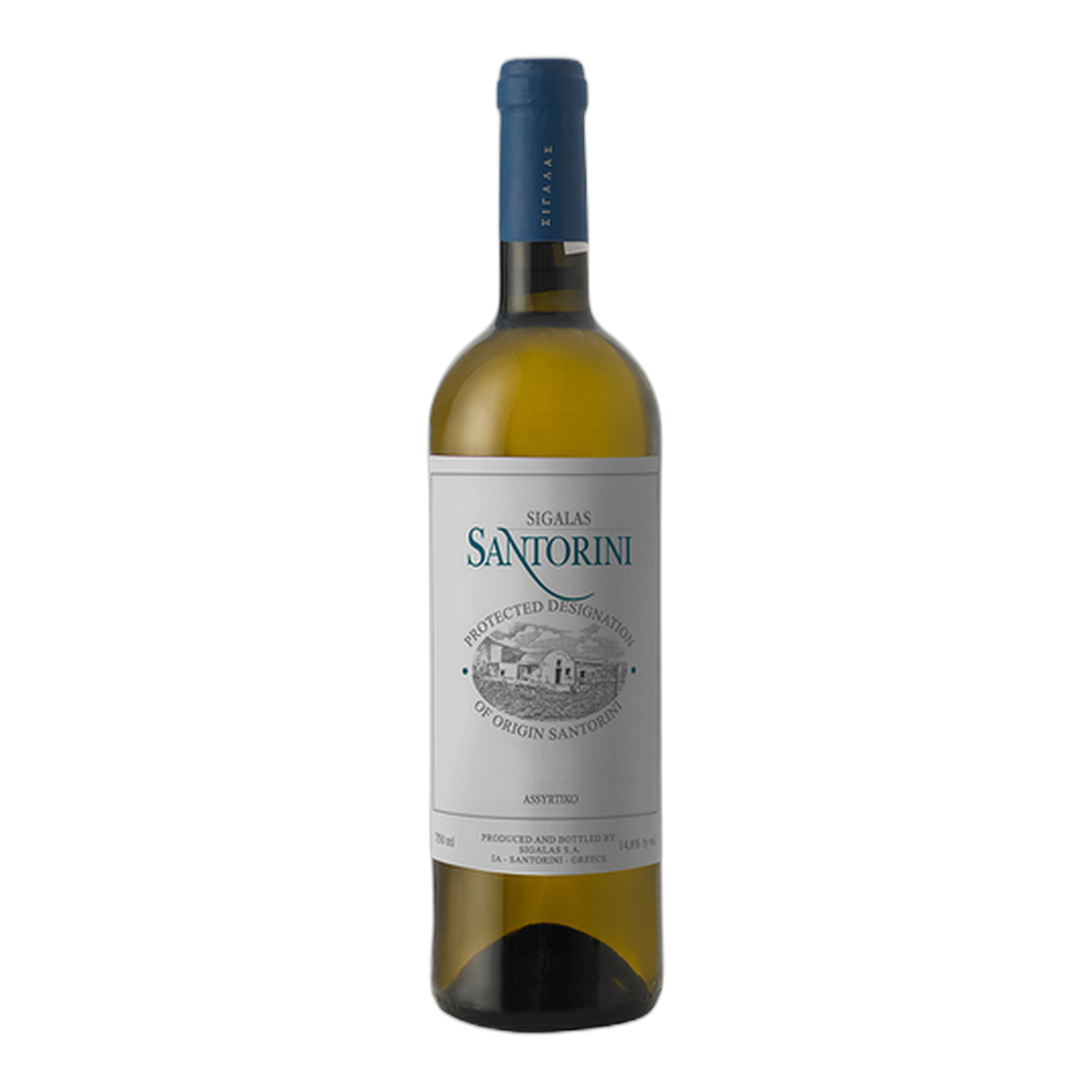
Domaine Sigalas
Domaine Sigalas Assyrtiko Santorini 2025
Domaine Sigalas Assyrtiko Santorini 2025
Couldn't load pickup availability
Description
Description
Domaine Sigalas Assyrtiko comes from the volcanic island of Santorini in the Aegean.
Santorini's vines are trained into baskets called kouloura, coiled low to the ground to shelter the fruit from relentless wind and to catch what little moisture the sea mist provides; it almost never rains. The soil is volcanic ash and pumice, which kept phylloxera out, so many vines are ungrafted and centuries old at the root. Assyrtiko holds extraordinary acidity despite the heat.
Serve at 11 degrees with grilled fish, octopus or salty cheese. It develops over eight years.
*Every effort is made to ensure the current vintage is accurate; however, variations can occur. If you are after a specific vintage, please contact us prior to ordering.
Wine Details
Wine Details
Type: White Wine
Style: Dry, medium-bodied, unoaked
Grape Varietal: Assyrtiko (100%)
Tastes Like: Santorini Assyrtiko, for lovers of Chablis or dry Riesling
Alcohol Percentage: 14%
Size: 750mL
Appellation: PDO Santorini (Protected Designation of Origin)
Region: Santorini, Cyclades, Greece
Terroir: Volcanic soils of lava, ash and pumice; ungrafted vines more than 60 years old, trained in low kouloura baskets, from parcels across the island
Aging: Whole-bunch pressed, fermented in stainless steel, at least four months on lees with stirring; no oak
Serving Temperature: 10 to 12°C
Winery
Winery
Domaine Sigalas is at Oia, on the plain in the north of Santorini, where the winery stands among its own vineyards. Paris Sigalas, a mathematician from a winemaking family, took over his grandfather's vineyard and made his first wine in 1991, the start of the estate as it is today. Kir-Yianni of northern Greece has managed the winery since 2020 and became its full owner in November 2025. Assyrtiko makes up around 70 per cent of the plantings. On Santorini the vines are trained into low baskets called kouloura, the new shoots woven around the previous year's canes, to shield the grapes from strong winds and the dry climate. The soil is lava, ash and pumice, and the island's vineyards were spared by phylloxera, the vine pest that devastated mainland Europe, so the vines grow on their own roots.
The estate's Santorini is 100% Assyrtiko from vines more than 60 years old in parcels across the island. The grapes are picked and sorted by hand, pressed as whole bunches and fermented in stainless steel, then left on their lees for at least four months, stirred from time to time, with no oak at any stage. Assyrtiko is famous for keeping its natural acidity in Santorini's heat, and the estate expects this wine to age for seven years or more.
Food Pairings
Food Pairings
Starters: Santorini yellow split pea purée with capers and red onion
Seafood: Grilled octopus with oregano and lemon
Fish: Whole grilled snapper with olive oil and lemon
Shellfish: Freshly shucked Sydney rock oysters
Cheese Pairings
Cheese Pairings
Santorini chloro: The island's own fresh goat's cheese, soft and tangy, the natural partner for Assyrtiko
Graviera of Naxos: A protected Cycladic cheese, firm and gently nutty
Feta (barrel-aged): Salty and crumbly, matched by the wine's acidity
Manouri: Creamy whey cheese, mild and fresh
Recipe
Recipe
Fava Santorinis (Santorini Yellow Split Pea Purée)
Fava is Santorini's signature meze. On the island it is made from a local yellow legume grown in the volcanic soil; elsewhere, yellow split peas give a very similar silky purée, finished with good olive oil, capers, red onion and lemon.
Ingredients:
- 250 g yellow split peas, rinsed
- 1 onion, chopped
- 1 garlic clove
- 1 bay leaf
- About 1 litre water
- 100 mL extra virgin olive oil, plus extra to serve
- Juice of 1 lemon
- Salt and freshly ground black pepper
- To serve: 1 small red onion, finely chopped; 2 tbsp capers, rinsed; dried oregano; lemon wedges; warm pita or crusty bread
Method:
- Put the split peas, onion, garlic and bay leaf in a pot with the water. Bring to the boil, skim off the foam and simmer gently, stirring now and then, for 45 to 60 minutes, until very soft and thick. Add a little more water if it catches.
- Remove the bay leaf. Blend with the olive oil and lemon juice until silky, then season well with salt and pepper.
- Spread on a plate while warm. Make a well in the centre, pour in more olive oil and top with the red onion, capers and a pinch of oregano.
- Serve warm or at room temperature with bread and lemon wedges.
Why it works: A creamy, earthy purée sharpened with capers and lemon needs a white with bright acidity, and Assyrtiko from the same volcanic island is the classic choice.