Dr. Bürklin-Wolf
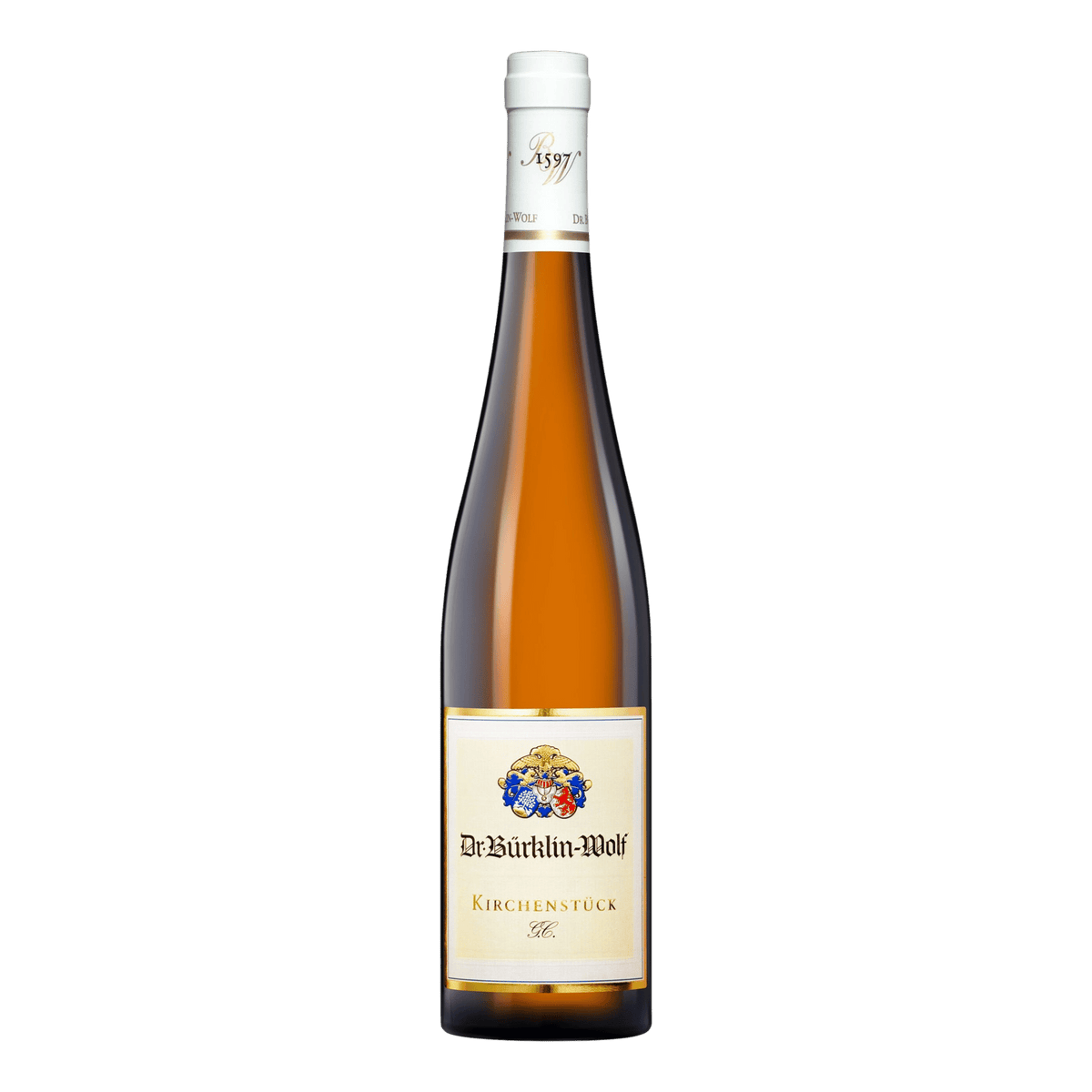
Dr. Bürklin-Wolf Kirchenstück Riesling 2022
Dr. Bürklin-Wolf Kirchenstück Riesling 2022
Couldn't load pickup availability
Description
Description
Dr. Bürklin-Wolf Kirchenstück Riesling comes from the walled Forst vineyard long regarded as the finest Riesling site in Germany.
Kirchenstück is a tiny walled parcel of around three and a half hectares beside the church in Forst, and it was valued above every other German vineyard in the tax maps of the nineteenth century. Its soils are unusually rich in limestone and clay for the Mittelhaardt, with basalt worked in from the quarry above the village, and the enclosing walls trap warmth. Dr. Bürklin-Wolf holds a small share and ranks it G.C., the estate's Grand Cru tier. Farming is biodynamic and Demeter certified. The grapes are picked by hand, whole-bunch pressed and fermented with ambient yeasts in large old oak, then aged at length on fine lees and bottled dry in very small quantity.
Dense, dry and built for very long ageing; serve at around 12 degrees, ideally decanted, with lobster, veal, or aged hard cheese.
*Every effort is made to ensure the current vintage is accurate; however, variations can occur. If you are after a specific vintage, please contact us prior to ordering.
Wine Details
Wine Details
Type: White Wine
Style: Dry (trocken)
Grape Varietal: Riesling
Tastes Like: A dry German Riesling from a top single vineyard (German Grand Cru) in the Pfalz
Alcohol Percentage: 12.5%
Size: 750mL
Appellation: Qualitätswein Pfalz (Germany's quality wine category: grapes from one named wine region, here the Pfalz, made to that category's rules); the estate ranks the Forster Kirchenstück Grand Cru (G.C.), the top of its four tiers (Estate, Village, Premier Cru, Grand Cru), kept for its best single vineyards; the vineyard is also classified VDP.Grosse Lage, the top vineyard class of the VDP, Germany's association of leading estates
Region: Forst, Mittelhaardt, Pfalz, Germany
Terroir: The Kirchenstück, a walled vineyard of under 4 hectares directly behind Forst's church; the estate holds 0.6 ha, planted in 1985; loam and clay, partly sandy, with limestone gravel and basalt
Aging: Wild-fermented in large neutral oak casks; the estate gives its G.C. wines up to 18 months on lees and releases them in the spring of the second year after harvest
Serving Temperature: 10-12°C
Winery
Winery
Dr. Bürklin-Wolf in Wachenheim, in the Pfalz, traces its history to 1597, and Bernhard Bürklin, town clerk and later mayor of Wachenheim, began the family's winegrowing there. The estate took its double name in 1875, when Luise Wolf married Dr. Albert Bürklin and brought the Wolf family's vineyards in Wachenheim, Forst, Deidesheim and Ruppertsberg into the estate. Bettina Bürklin-von Guradze took over in 1990, and today the estate farms about 85 hectares in the Mittelhaardt, making it one of Germany's largest family-owned wine estates. It was among the first in Germany to rank its vineyards on the Burgundian model, from the estate wine through village wines to Premier Cru (P.C.) and Grand Cru (G.C.), with its top sites matching those rated highest in the Royal Bavarian vineyard classification of 1828. The whole estate has been farmed biodynamically since 2005, certified by Biodyvin and as organic, and the Rieslings ferment with their own natural yeasts, the single-vineyard wines in large old oak casks.
The Kirchenstück is a small walled vineyard, under 4 hectares in all, lying directly behind the church in Forst. In the Royal Bavarian vineyard classification of 1828 it received the highest score of every site assessed. The estate holds 0.6 hectares, planted in 1985, on loam and clay soils, partly sandy, with limestone gravel and basalt. The 2022 was fermented with its own yeasts in large neutral oak and, like all the estate's G.C. wines, given long lees ageing and released in the spring of the second year after harvest. It is dry, at 12.5% alcohol. Open it for an occasion that deserves a great vineyard, and serve it in a large glass at cellar temperature rather than straight from the fridge.
Food Pairings
Food Pairings
Seafood: Seared scallops with brown butter and cauliflower purée
Crustaceans: Lobster or crayfish tails with beurre blanc
Veal: Veal tenderloin with a morel cream sauce
Pork: Slow-roasted pork belly with apple and celeriac
Cheese Pairings
Cheese Pairings
Weisslacker: A Bavarian washed-rind cheese from the Allgäu, very salty and soft; a dry Grand Cru has the acidity and weight to stand up to it
Comté (18 months): A firm Jura cheese with a dense, smooth texture that suits a dry wine of real weight
Vacherin Mont d'Or: A soft, spoonable spruce-bound cheese, rich in fat; the wine's acidity cuts straight through it
Recipe
Recipe
Fasan mit Weinkraut (Palatinate Pheasant Roasted on Riesling Sauerkraut with Grapes)
Ingredients (Serves 4):
- 2 pheasants, about 900 g each (or 2 guinea fowl, or a 1.6 kg chicken)
- 8 rashers streaky bacon or thin slices of Speck, to wrap the birds
- 4 sprigs thyme
- 2 tbsp lard or butter
- 1 onion, thinly sliced
- 750 g sauerkraut, drained (rinse briefly if very acidic)
- 1 apple, peeled and grated
- 300 mL dry Pfalz Riesling
- 250 mL chicken stock
- 6 juniper berries, lightly crushed, and 1 bay leaf
- 250 g seedless white grapes, halved
- Salt and black pepper
Instructions:
- Preheat the oven to 190°C. Season the birds inside and out, tuck 2 thyme sprigs into each cavity and wrap the breasts with the bacon, tying with kitchen string.
- Melt half the lard in a wide ovenproof casserole and soften the onion for 5 minutes.
- Add the sauerkraut, apple, Riesling, stock, juniper and bay leaf. Cover and simmer gently for 30 minutes, stirring now and then.
- Meanwhile, heat the remaining lard in a roasting pan and brown the birds on all sides, then roast for 25 minutes.
- Take off the bacon (chop it and stir it into the sauerkraut), sit the birds on top of the sauerkraut in the casserole and scatter the grapes around them.
- Return to the oven uncovered for 15-20 minutes, until the breast is browned and the thigh juices run clear. A chicken needs 60-70 minutes in total, until the thigh reaches 75°C.
- Rest for 10 minutes, then carve and serve on the Weinkraut with mashed potato or bread dumplings.
In the Pfalz, game birds cooked on Weinkraut, sauerkraut braised in the region's own Riesling, belong to autumn and the end of the grape harvest, and grapes from the vineyard often go into the pan as well. The sauerkraut's acidity and the bacon's salt and fat call for a dry wine with acidity of its own and the weight to match a roast bird: a Grand Cru Riesling from Forst, at 12.5% alcohol and fully dry, meets the sauerkraut head on and has the structure for the pheasant.