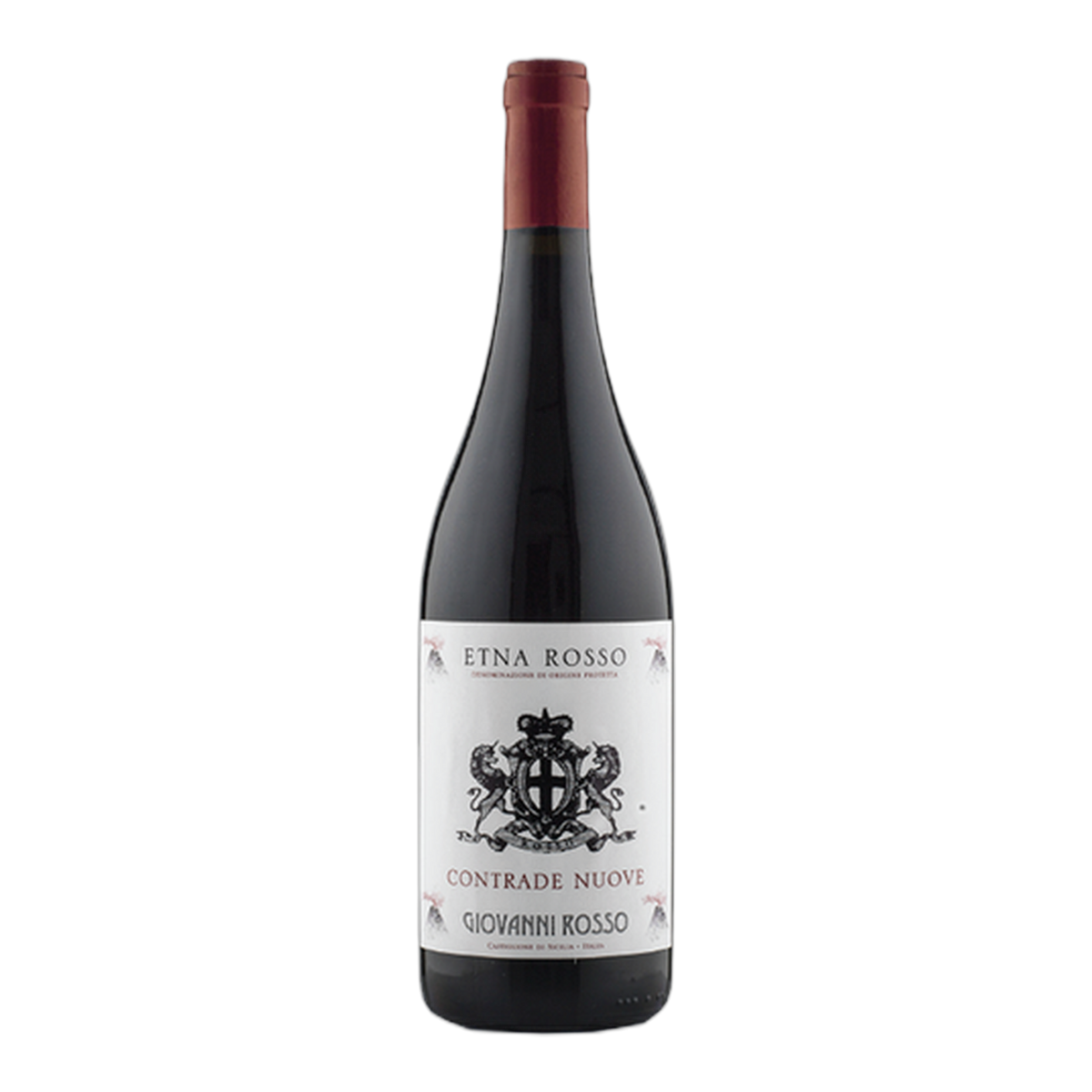
Giovanni Rosso
Giovanni Rosso Etna Rosso Contrade Nuove 2022
Giovanni Rosso Etna Rosso Contrade Nuove 2022
Couldn't load pickup availability
Description
Description
Giovanni Rosso Etna Rosso Contrade Nuove is a Nerello Mascalese from the volcano's terraced slopes.
Nerello Mascalese is Etna's great red grape, often compared to Nebbiolo and Pinot Noir for its pale colour, high acidity and fine tannin. It grows here on black volcanic sand, frequently on ungrafted old bush vines, at altitudes that would be impossible further north. The estate has farmed on Etna alongside its Piedmontese holdings for more than a decade. Ageing is in large oak.
Serve at 16 degrees with roast pork, tuna or a mushroom pasta. It develops over ten years.
*Every effort is made to ensure the current vintage is accurate; however, variations can occur. If you are after a specific vintage, please contact us prior to ordering.
Wine Details
Wine Details
Type: Red Wine
Style: Light to medium-bodied
Grape Varietal: Nerello Mascalese 100%
Tastes Like: Etna's Nerello Mascalese, often compared to Pinot Noir and Nebbiolo for its pale colour, high acidity and fine tannin
Alcohol Percentage: 13.5%
Closure: Cork
Size: 750mL
Appellation: Etna DOC (Denominazione di Origine Controllata: Italy's controlled designation of origin, meaning the wine is grown and made within the defined Etna zone on the slopes of the volcano and follows its rules on grape varieties, yields and production)
Region: Etna, Sicily, Italy
Terroir: Younger Nerello Mascalese vines in Contrada Montedolce, near Solicchiata on Etna's northern slope, at around 730 to 750 metres on volcanic soils.
Aging: Fermented in a combination of amphorae, conical oak vats and stainless steel, then aged for 9 months in oak before bottling.
Serving Temperature: 16-18°C
Winery
Winery
Giovanni Rosso is a family estate in Serralunga d'Alba, in the heart of Piedmont's Barolo country, with more than a century of history. The family grew from a grape-growing business into one of the area's leading wine estates in the 1990s, and today it is run by Davide Rosso, the fourth generation. After first visiting Etna in 2014, Davide bought vineyards in 2016 in Contrada Montedolce, near Solicchiata in the commune of Castiglione di Sicilia on the volcano's north-eastern slope. The vines grow at around 730 to 750 metres at the foot of Montedolce, a small extinct crater that gives the contrada its name, and the estate's Etna wines are made from Carricante and Nerello Mascalese grown there.
Contrade Nuove, meaning "new sites", is the estate's Etna Rosso from its younger Nerello Mascalese vines in Contrada Montedolce. Nerello can turn reductive in the cellar, so the team ferments it in a mix of amphorae, conical oak vats and stainless steel, each vessel playing its part, before 9 months in oak. The 2022 shows how a Barolo family approaches Etna's great red grape: transparent, fine-boned and made for the table, ready to drink now and with the structure to keep developing over the coming decade.
Food Pairings
Food Pairings
Pasta: Pasta alla Norma with eggplant and ricotta salata
Tuna: Seared tuna with capers and olive oil
Meat: Roast pork with fennel seeds and garlic
Mushrooms: Sautéed wild mushrooms with garlic and parsley on grilled bread
Cheese Pairings
Cheese Pairings
Ragusano: Sicily's protected stretched-curd cow's milk cheese; aged wheels have the firmness to meet the wine's tannin
Piacentinu Ennese: Sheep's milk cheese from Enna made with saffron and peppercorns; a semi-firm cheese suited to a lighter red
Caciocavallo: Southern Italian stretched-curd cheese; a medium-aged piece suits a fine-boned red
Castelmagno: Crumbly, aged cow's milk cheese from Piedmont, the family's home region; the wine's acidity cuts its richness
Recipe
Recipe
Pasta con i Broccoli Arriminati (Palermo Pasta with Cauliflower, Anchovies and Saffron)
Ingredients (Serves 4):
- 1 cauliflower (about 800 g), ideally the green Sicilian variety, cut into small florets
- 400 g bucatini
- 80 mL extra virgin olive oil
- 1 brown onion, finely chopped
- 6 anchovy fillets in olive oil, drained
- 1 large pinch (about 1/4 tsp) saffron threads, steeped in 3 tbsp hot water
- 40 g currants, soaked in warm water for 10 minutes and drained
- 40 g pine nuts, lightly toasted
- 1/2 cup (40 g) dry breadcrumbs, toasted in 1 tbsp olive oil until golden
- Salt and freshly ground black pepper
- Grated pecorino to serve (optional)
Instructions:
- Bring a large pot of salted water to the boil. Cook the cauliflower for 8 to 10 minutes until very tender. Lift out with a slotted spoon and keep the water for the pasta.
- Heat the oil in a large, deep frying pan over medium heat. Cook the onion for 8 minutes until soft and golden. Add the anchovies and stir until they dissolve.
- Add the cauliflower and the saffron with its water. Cook for 5 minutes, stirring and pressing the cauliflower with a wooden spoon so it breaks down into a chunky sauce. Stir in the currants and pine nuts and season with pepper.
- Meanwhile, return the cauliflower water to the boil and cook the bucatini until al dente.
- Drain the pasta, keeping 125 mL of the water. Add the pasta to the pan with a splash of the water and stir well over the heat for 1 to 2 minutes (arriminati means stirred) until everything is coated.
- Serve topped with the toasted breadcrumbs, and pecorino if you like.
Pasta con i broccoli arriminati is a Palermo classic, and its anchovies, saffron, pine nuts and currants trace the Arab influence on western Sicilian cooking. It is a dish with plenty going on but no heaviness, so it suits a red of light to medium body, fine tannin and fresh acidity. Nerello Mascalese has all three: firm enough to stand up to the anchovy and the richness of the pine nuts, yet light enough not to flatten the cauliflower.