Torres
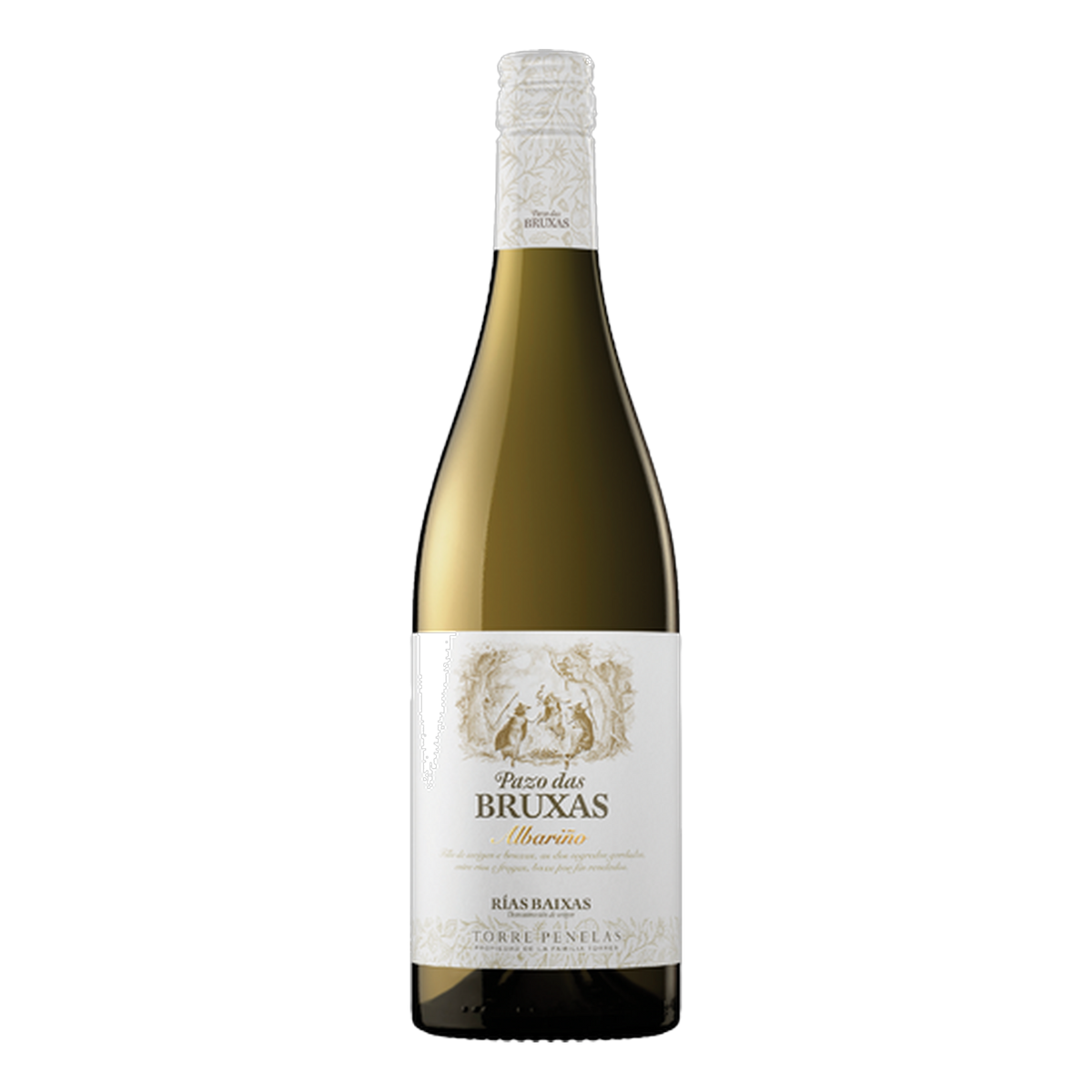
Pazo das Bruxas Albariño Screw Cap 2024
Pazo das Bruxas Albariño Screw Cap 2024
Couldn't load pickup availability
Description
Description
Pazo das Bruxas Albariño Screw Cap is an Albariño from Rías Baixas, on the green Atlantic coast of Galicia in north-west Spain.
The name means the manor house of the witches in Galician, a nod to the folklore of a region where meigas remain a part of everyday speech. The wine is the Rías Baixas project of Familia Torres, the Catalan family whose base is far away in Penedès. Galicia is wet, cool and green, closer in climate to Brittany than to central Spain, and Albariño is traditionally trained high on granite pergolas so that sea breezes can move through the canopy and dry the fruit. Grapes are picked by hand into small crates, pressed gently and fermented cool in stainless steel, with a period on fine lees before bottling under screwcap.
Made for shellfish above all: Galician octopus, clams, oysters or grilled prawns. Serve well chilled, at around 8 degrees.
*Every effort is made to ensure the current vintage is accurate; however, variations can occur. If you are after a specific vintage, please contact us prior to ordering.
Wine Details
Wine Details
Type: White Wine
Style: Light-bodied, dry and crisp
Grape Varietal: 100% Albariño
Tastes Like: A coastal Galician Albariño, a close cousin of the Alvarinho grown just over the border for Vinho Verde
Alcohol Percentage: 12.5%
Closure: Screwcap
Size: 750mL
Appellation: DO Rías Baixas (Denominación de Origen: the protected name for wines from the Atlantic coast of south-west Galicia)
Region: Rías Baixas, Galicia, Spain
Terroir: Mainly the Val do Salnés subzone, on Galicia's Atlantic coast
Aging: Two hours of skin contact, then fermented in stainless steel at 14-17°C
Serving Temperature: 8-10°C
Winery
Winery
Familia Torres was founded in 1870 in Vilafranca del Penedès, south-west of Barcelona, by the brothers Jaime and Miguel Torres Vendrell, and the family still owns and runs it; the fifth generation took over the running of the business in 2012. Since the 1980s the family has worked to recover ancestral Catalan grape varieties that had all but disappeared, and in 2008 it launched Torres & Earth, its environmental programme. It now farms with regenerative practices and aims to be a zero-emission winery by 2040. Beyond its home in Penedès, the family bought land in Priorat in 1996, built a winery in Rioja Alavesa in the mid-2000s and began a project in Rías Baixas, Galicia, in 2012.
Pazo das Bruxas is the family's Albariño from Rías Baixas, drawn mainly from the Val do Salnés on the Atlantic coast. The name translates as 'manor house of the witches', and the family tells a Galician legend of witches gathering in the woods around the old manor houses, or pazos, to nourish the sap of the vines. For the 2024 the juice spent two hours on the skins, then fermented in stainless steel at cool temperatures to keep it fresh.
Food Pairings
Food Pairings
Shellfish: Steamed mussels, clams or pipis
Starters: Grilled sardines with lemon and sea salt
Seafood: Prawns a la plancha with garlic and parsley
Vegetarian: Padrón peppers or a green salad with fresh cheese
Cheese Pairings
Cheese Pairings
Tetilla: Galicia's soft, creamy cow's cheese, a local match
San Simón da Costa: Smoked Galician cow's cheese whose gentle smoke suits a crisp white
Queso de Cebreiro: Fresh, crumbly Galician cheese, mild enough to let the wine lead
Young goat's cheese: Its tang meets the wine's acidity
Recipe
Recipe
Pulpo a la Gallega (Galician Octopus with Paprika and Potatoes)
Ingredients (Serves 4):
- 1kg cooked octopus, sliced
- 500g potatoes
- 3 tbsp extra virgin olive oil
- 1 tsp sweet smoked paprika
- Sea salt flakes
Instructions:
- Boil the potatoes in salted water until tender, then slice into rounds.
- Arrange the warm potato slices on a serving platter.
- Place the sliced octopus over the potatoes.
- Drizzle generously with extra virgin olive oil.
- Sprinkle with smoked paprika and sea salt flakes.
Pulpo a la Gallega is one of the best-known dishes of Galicia in north-west Spain, traditionally served at local fairs and festivals. Its simple seasoning and tender texture suit a light-bodied, crisp white with the freshness to cut through the olive oil and paprika.