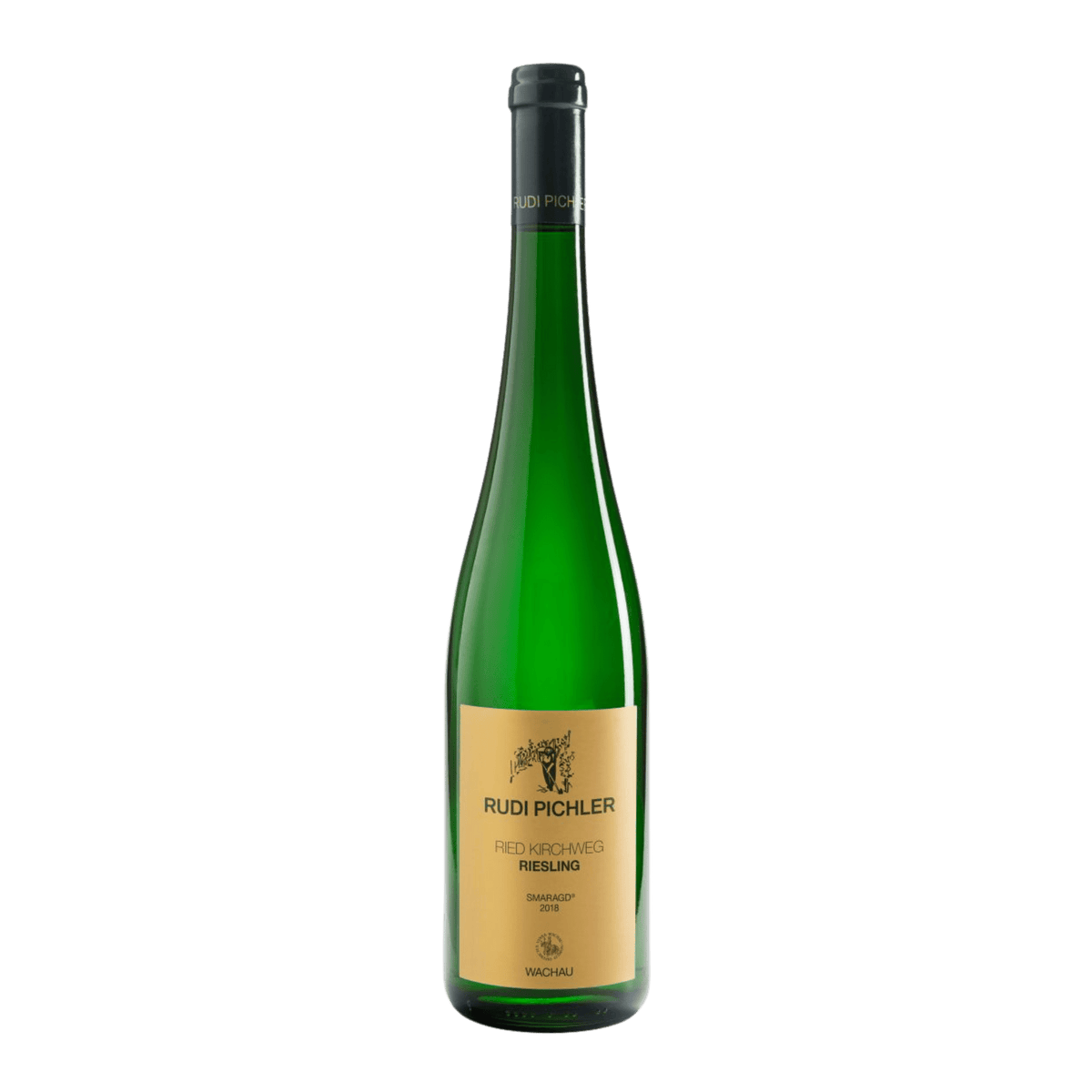
Rudi Pichler
Rudi Pichler Riesling Kirchweg Smaragd 2024
Rudi Pichler Riesling Kirchweg Smaragd 2024
Couldn't load pickup availability
Description
Description
Rudi Pichler Riesling Kirchweg Smaragd is a dense, severe-edged Riesling from an ancient vineyard at the foot of the Hochrain.
Kirchweg was first documented in 1050, and its soils are built from sediment and rock washed down from the vineyards above. Most of the site is alluvial, but the Pichler parcel is rockier, which gives the wine a sterner, more structured character. The family's cellar in Wösendorf works for full dryness and clarity, with skin contact tuned to the vintage and little lees ageing.
A dense mineral texture carries fine lemon, green apple and white flower aromas through a long finish. Serve at 11°C with grilled sardines, pork chops with sage or a wedge of aged gruyère.
*Every effort is made to ensure the current vintage is accurate; however, variations can occur. If you are after a specific vintage, please contact us prior to ordering.
Wine Details
Wine Details
Type: White Wine
Style: Full-bodied, Dry, Dense, Structured
Grape Varietal: Riesling
Tastes Like: Comparable to a firm dry Clare Valley Riesling, but denser and more structured
Alcohol Percentage: 13.5%
Closure: Cork
Size: 750mL
Appellation: Wachau DAC
Region: Wösendorf, Wachau, Niederösterreich, Austria
Terroir: Kirchweg, at the foot of the Hochrain: mostly alluvial sediment and rock washed down from above, with a rockier Pichler parcel
Aging: Skin contact tuned to the vintage, fermented fully dry with little lees ageing (Smaragd tier)
Serving Temperature: 11℃ – Serve chilled
Winery
Winery
The Pichlers have worked vines around Wösendorf for close to 300 years. Their cellar aims for full dryness and clarity, with skin contact adjusted to each vintage and little lees ageing, and Rudi prefers to let each vineyard’s rock set the shape of the wine.
Kirchweg, at the foot of the Hochrain, is among the oldest documented vineyards in the Wachau, recorded almost a thousand years ago. Most of it is alluvial, built from sediment washed down from the slopes above, but the Pichler parcel is rockier, which gives this Riesling a sterner, more structured edge and a dense mineral texture.
Food Pairings
Food Pairings
Seafood: Excellent with grilled sardines or char-grilled octopus
Pork: Pairs beautifully with pork chops and sage, or pork dumplings
Poultry: Lovely with roast spatchcock and lemon
Cheese: Ideal with aged gruyère and hard mountain cheeses
Cheese Pairings
Cheese Pairings
Gruyère (aged): Deep and nutty, standing up to the wine’s dense structure
Tiroler Graukäse: Sharp, tangy sour-milk cheese that suits a severe, dry Riesling
Appenzeller: Spicy and firm, cut by the wine’s lemony acidity
Mimolette: Hard and caramel-edged, a foil for the wine’s steely line
Recipe
Recipe
Grammelknödel mit Sauerkraut (Crackling Dumplings with Sauerkraut)
Ingredients (Serves 4):
- 600g floury potatoes, boiled in their skins and cooled
- 150g plain flour
- 1 egg
- 40g semolina
- 200g pork crackling (Grammeln) or crisp-fried diced pork belly, finely chopped
- 1 small onion, finely diced and fried golden
- 1 garlic clove, crushed, and 1 tsp chopped marjoram
- 500g sauerkraut
- 1 tsp caraway seeds and 100ml dry white wine
Instructions:
- Mix the crackling with the fried onion, garlic and marjoram, season, then roll into 12 walnut-sized balls and chill.
- Peel and finely mash or rice the potatoes. Knead in the flour, semolina, egg and a pinch of salt to a smooth dough.
- Divide the dough into 12, flatten each piece, wrap around a crackling ball and roll smooth.
- Simmer the dumplings in salted water for 12–15 minutes until they float and are cooked through.
- Meanwhile, warm the sauerkraut with the caraway and wine for 15 minutes.
- Serve the dumplings on the sauerkraut with a spoonful of the pan juices.
Grammelknödel are a Lower Austrian country classic, the kind of hearty dish served in Wachau inns after the harvest. Kirchweg’s stern structure and dense minerality slice through the rich pork filling, while its lemony acidity is a natural match for the tangy sauerkraut.