Schloss Gobelsburg
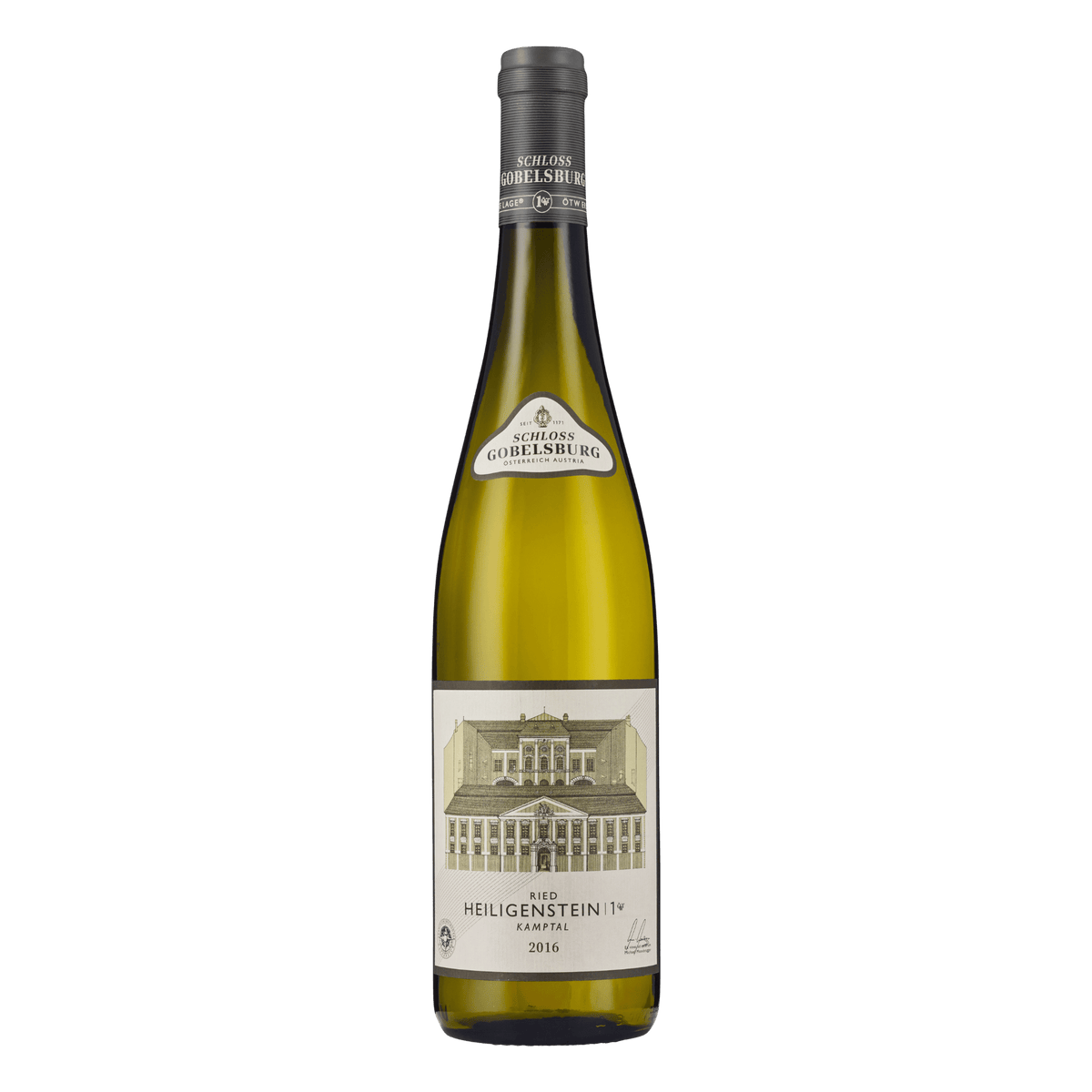
Schloss Gobelsburg Riesling Heiligenstein 2022
Schloss Gobelsburg Riesling Heiligenstein 2022
Couldn't load pickup availability
Description
Description
Schloss Gobelsburg Riesling Heiligenstein is the estate's flagship Riesling from the terraced Zöbinger Perm.
The Heiligenstein is a singular piece of geology, a Permian mix of sandstone, silt, arkose and organic sediments with some volcanic material, and the castle holds some of its oldest Riesling terraces there. Harvest is by hand in early November, and the wine then spends 18 months in 500-litre casks of Austrian Manhartsberg oak before bottling. The estate has worked these terraces since the Cistercians of Zwettl took over in 1740.
Peach, candied orange and wild herbs layer over a deep, finely balanced palate. Drink at 11 to 12°C now with herb-crusted fish or crisp-skin barramundi, or cellar it; the estate says it peaks at six to eight years and can go for decades.
*Every effort is made to ensure the current vintage is accurate; however, variations can occur. If you are after a specific vintage, please contact us prior to ordering.
Wine Details
Wine Details
Type: White Wine
Style: Medium to full-bodied, Dry, Deep, Finely Balanced
Grape Varietal: Riesling
Tastes Like: Comparable to a top dry Riesling from Eden Valley or Tasmania, but deeper and more layered, with real cellaring potential
Alcohol Percentage: 13.5%
Closure: Cork
Size: 750mL
Appellation: Kamptal DAC
Region: Zöbing, Kamptal, Niederösterreich, Austria
Terroir: Terraces of the Zöbinger Heiligenstein: Permian sandstone, silt, arkose and organic sediments with some volcanic material
Aging: Hand-harvested in early November, then 18 months in 500-litre casks of Austrian Manhartsberg oak
Serving Temperature: 11–12℃ – Serve lightly chilled
Winery
Winery
The monks of Zwettl Abbey took over Schloss Gobelsburg in the eighteenth century and still own it; since the mid-nineties Michael Moosbrugger has led a quiet revival there, returning to hand work in the vineyards and old cask-cellar techniques. The estate holds terraces on both the Gaisberg and the Heiligenstein, the Kamptal’s two great Riesling hills.
This is the estate’s flagship Riesling, grown on the terraced Zöbinger Heiligenstein, a singular Permian mix of sandstone, silt, arkose and organic sediments with some volcanic material. Harvested by hand in early November, it spends 18 months in 500-litre casks of Manhartsberg oak. The estate reckons it peaks at six to eight years and can go on for decades.
Food Pairings
Food Pairings
Seafood: Excellent with herb-crusted fish, crisp-skin barramundi or lobster
Poultry: Pairs beautifully with roast pheasant or chicken with morels
Pork: Lovely with pork fillet and apricots
Cheese: Ideal with aged Alpine cheeses
Cheese Pairings
Cheese Pairings
Tiroler Bergkäse (aged): Deep and nutty, a match for the wine’s weight and length
Comté (18 months): Crystalline and savoury, echoing the candied orange and herbs
Beaufort: Rich Alpine cheese with a floral edge that suits the wine’s layered palate
Österkron: An Austrian blue, creamy and mild, set off by the Riesling’s acidity
Recipe
Recipe
Saibling mit Kräuterkruste (Herb-Crusted Char)
Ingredients (Serves 4):
- 4 Arctic char or ocean trout fillets (about 160g each), skin on
- 60g fresh breadcrumbs
- 60g soft butter
- 2 tbsp chopped parsley
- 1 tbsp chopped dill
- 1 tbsp chopped chives
- Zest of 1 lemon
- 1 tbsp Dijon mustard
- 600g kipfler potatoes
- Salt and white pepper
Instructions:
- Boil the potatoes in salted water until tender, then drain and keep warm.
- Preheat the oven grill to high. Mix the butter, breadcrumbs, herbs and lemon zest into a paste and season.
- Season the fish and sear skin-side down in a little oil in an ovenproof pan for 3 minutes until crisp.
- Turn the fillets, brush the flesh side with mustard and press on the herb crust.
- Grill for 3–4 minutes until the crust is golden and the fish just cooked.
- Serve with the potatoes, crushed with a little butter and parsley.
Saibling, the Alpine char, is one of Austria’s most prized freshwater fish and a favourite of Lower Austrian wine-country restaurants. The Heiligenstein’s depth and wild-herb notes meet the herb crust head on, while its fine acidity and length carry the richness of the fish.