Trimbach
Trimbach Riesling Brand Grand Cru 2021
Trimbach Riesling Brand Grand Cru 2021
Couldn't load pickup availability
Description
Description
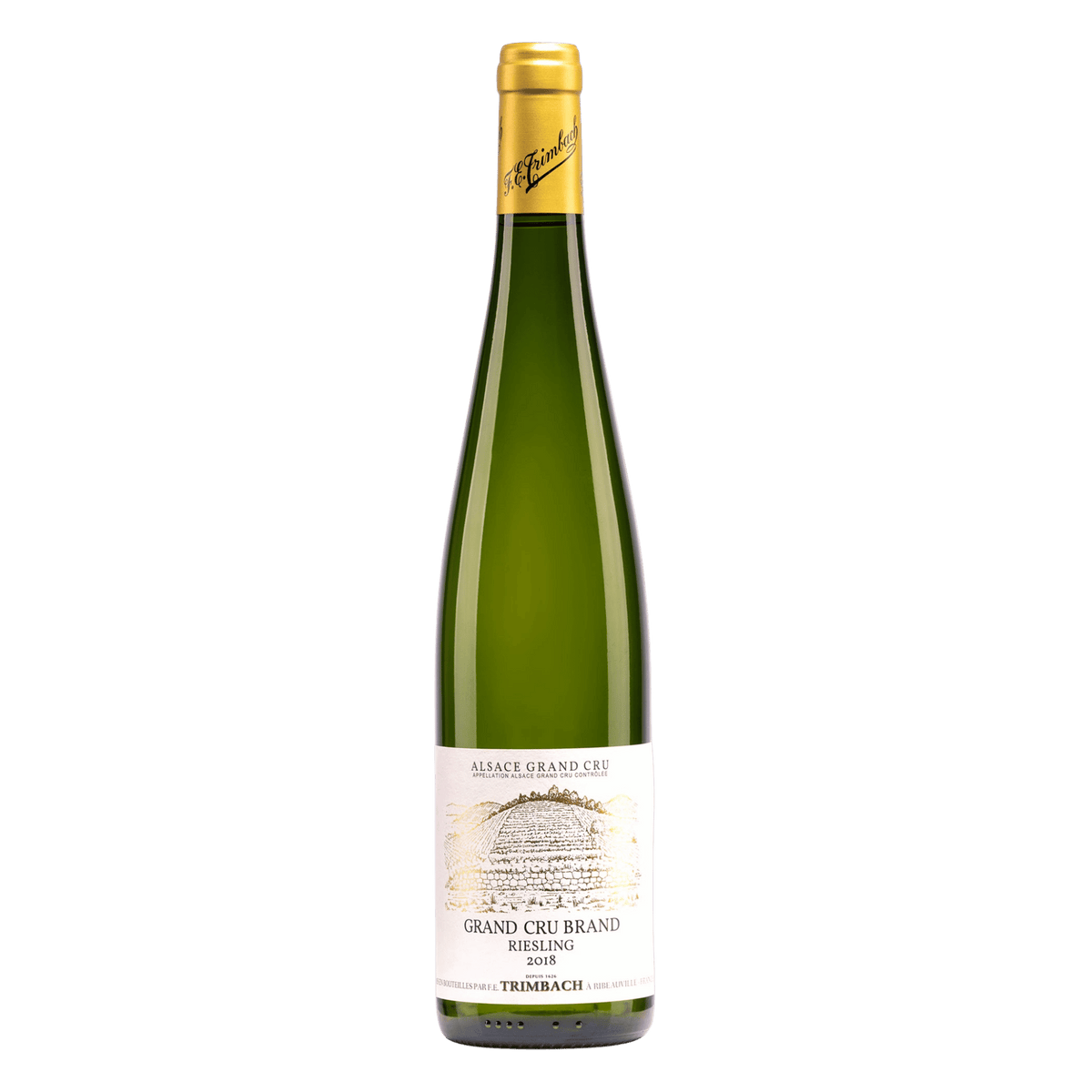
Trimbach Riesling Brand is a grand cru Alsace Riesling from the steep granite amphitheatre above Turckheim.
Brand climbs sharply behind Turckheim at the mouth of the Munster valley, a south and south-east facing slope of decomposed biotite granite that holds heat and drains hard. It is among the sunniest sites in Alsace, and its Rieslings are typically riper and more powerful than those of the marl and limestone crus, with a smoky, stony edge from the granite. Trimbach ferments the fruit in stainless steel after whole-bunch pressing, blocks malolactic fermentation and uses no oak, so the site rather than the cellar sets the character of the wine. Residual sugar sits at 10.6 grams per litre, balanced by the vintage's acidity and reading as broadly dry.
Generous but firmly structured, it suits roast pork, smoked fish and Asian dishes with gentle spice; serve at 11 to 12 degrees.
*Every effort is made to ensure the current vintage is accurate; however, variations can occur. If you are after a specific vintage, please contact us prior to ordering.
Wine Details
Wine Details
Type: White Wine
Style: Dry, full-bodied, unoaked
Grape Varietal: Riesling (100%)
Tastes Like: Comparable to a dry German Riesling from a granite site
Alcohol Percentage: 13%
Closure: Cork
Size: 750mL
Appellation: Alsace Grand Cru AOC (Appellation d'Origine Contrôlée), the top tier of Alsace's protected names, reserved for wine from a small number of officially classified vineyards; this one is Brand at Turckheim, classified in 1983
Region: Alsace, France
Terroir: Old vines in the Brand grand cru above Turckheim, including a south-facing parcel of vines more than 60 years old; two-mica granite
Aging: Fermented in stainless steel and old casks with no malolactic fermentation
Serving Temperature: 11 to 12°C
Winery
Winery
The Trimbach story begins in 1626, when Jean Trimbach was received as a citizen of Riquewihr and became a winegrower there. The family moved to Hunawihr in 1840, and in 1875 Frédéric Emile Trimbach won a diploma of honour at the international fair in Brussels. Since 1920 Maison Trimbach has been based in Ribeauvillé, where the twelfth and thirteenth generations of the family run it today. The family owns around 60 hectares, most of them in Ribeauvillé, Bergheim and Hunawihr, and also buys grapes from long-standing partner growers; the estate has been certified organic since 2023. The house style is famously dry and precise. The wines ferment in temperature-controlled vats, rest for several weeks on their lees and mature in stainless steel and old casks, and with the single exception of Pinot Noir they never go through malolactic fermentation, which keeps the grapes' natural acidity.
Brand is the grand cru of Turckheim, a steep slope of two-mica granite classified in 1983. Brand is a recent addition to the Trimbach range: the family acquired vines here in 2016 and 2017, including a south-facing parcel of vines more than 60 years old, and its first Brand was the 2018. The 2021 follows the house method, fermented in stainless steel and old casks without malolactic fermentation, so the granite rather than the cellar shapes the wine.
Food Pairings
Food Pairings
Charcuterie: Presskopf with a sharp herb vinaigrette, or a plate of Alsace cured meats
Pork: Roast pork shoulder with caramelised onions
Fish: Hot-smoked trout with horseradish cream
Asian: Pork and ginger dumplings
Cheese Pairings
Cheese Pairings
Bargkass: A firm mountain cheese from the Vosges, nutty and savoury
Comté (18 months): Crystalline and rich, a match for a powerful dry Riesling
Tête de Moine: Shaved fine, its intensity meets the wine's grip
Morbier: Creamy and mild with a gentle tang
Recipe
Recipe
Presskopf (Alsace Pork Terrine with Herb Vinaigrette)
A classic of the Alsace winstub: slow-cooked pork set in its own jellied stock with gherkins and herbs, sliced cold and served with a sharp vinaigrette. Many Alsace cooks make it with pig's head; this home version uses pork hocks and shoulder.
Ingredients:
- 2 pork hocks (about 1.5 kg)
- 800 g pork shoulder, in one piece
- 2 pig's trotters, split (ask your butcher), for setting
- 1 onion, studded with 3 cloves
- 2 carrots, halved
- 1 leek, halved
- 2 bay leaves, 6 peppercorns and a few thyme sprigs
- 250 mL dry Riesling
- 4 tbsp chopped parsley
- 3 tbsp chopped chives
- 100 g cornichons, chopped
- 2 shallots, finely chopped
- For the vinaigrette: 2 tbsp red wine vinegar, 1 tsp Dijon mustard, 6 tbsp sunflower oil, 1 shallot finely chopped, 2 tbsp chopped parsley
Method:
- Put the hocks, shoulder, trotters, vegetables, herbs, spices and wine in a large pot. Cover with cold water, bring slowly to a simmer, skim and cook gently for 3 hours until the meat falls from the bones.
- Lift out the meat. Strain the stock, return it to the pot and boil until reduced to about 750 mL. Season well.
- Pull the meat from the hocks and shoulder, discarding bones, skin and fat, and cut into small pieces. Mix with the parsley, chives, cornichons and shallots.
- Pack the meat into a 1.5 litre terrine or loaf tin lined with cling film and pour over enough hot stock to cover. Cool, then chill overnight until set.
- Whisk the vinaigrette ingredients together. Turn out the terrine, slice thickly and serve with the vinaigrette, a green salad and crusty bread.
Why it works: Presskopf is rich and gelatinous, and the vinaigrette is sharp. A dry Riesling from granite has the acidity to cut the jelly and refresh the palate, and enough body to stand up to the pork.