Trimbach
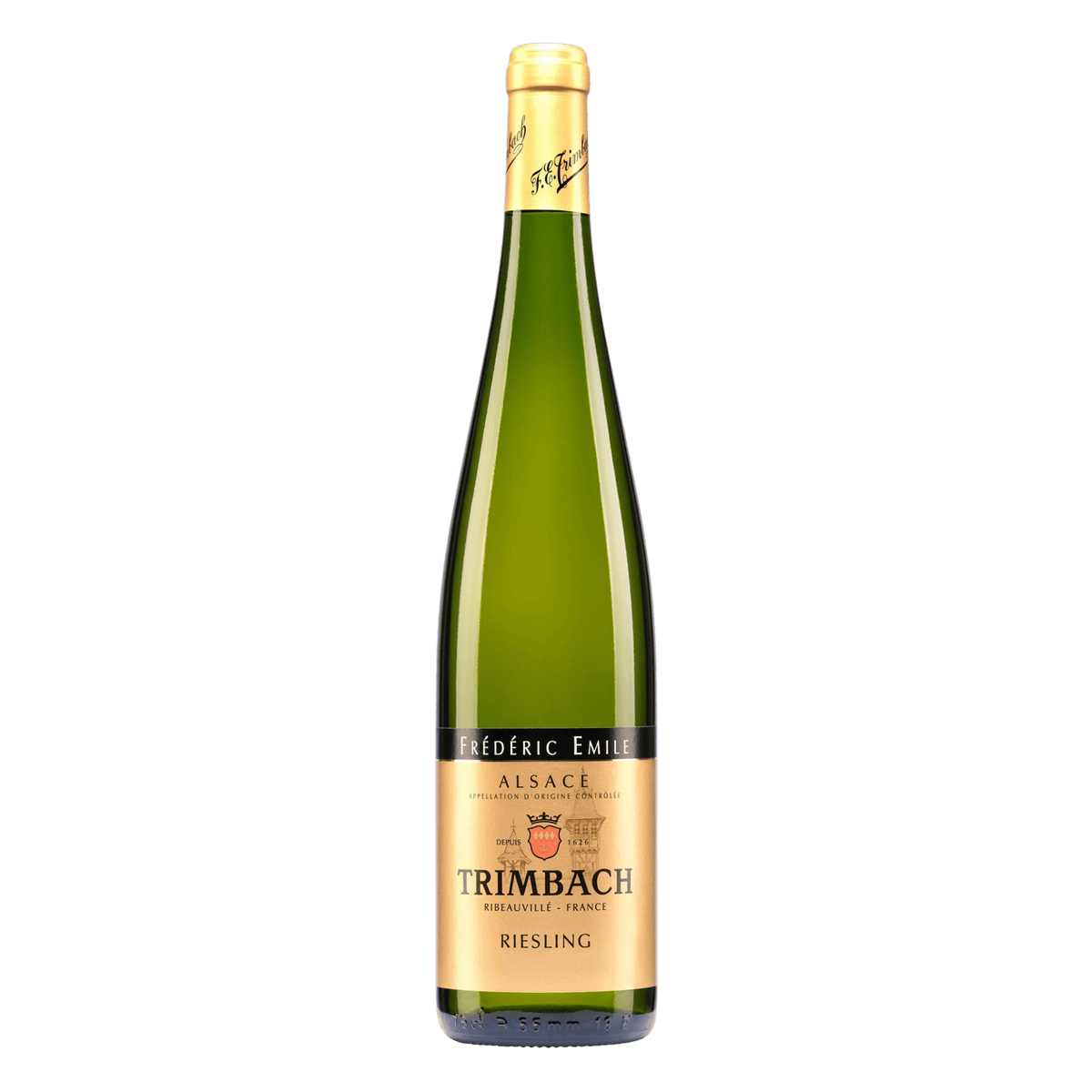
Trimbach Riesling Frédéric Emile 2017
Trimbach Riesling Frédéric Emile 2017
Couldn't load pickup availability
Description
Description
Trimbach Riesling Frédéric Emile is the house's long-lived flagship Riesling, drawn from grand cru parcels on the slope directly above the family cellars.
The cuvée is named for the nineteenth-century Trimbach who established the estate's reputation, and it is blended from vines on the Geisberg and Osterberg, two adjoining grand crus on the marl, limestone and sandstone hillside behind Ribeauvillé. The family has traditionally declined to print the grand cru names on the label, preferring the cuvée's own identity. Fruit is whole-bunch pressed and fermented in stainless steel, malolactic fermentation is blocked and no oak is used, after which the wine rests on fine lees and then several years in bottle in the cellars before it is released. At 2.4 grams per litre of residual sugar it is completely dry and famously austere in youth.
Severe and mineral when young, it opens with age and suits lobster, poultry in cream and aged Comté; serve at 11 to 12 degrees.
*Every effort is made to ensure the current vintage is accurate; however, variations can occur. If you are after a specific vintage, please contact us prior to ordering.
Wine Details
Wine Details
Type: White Wine
Style: Dry, full-bodied, unoaked
Grape Varietal: Riesling (100%)
Tastes Like: Comparable to a dry German Riesling Grosses Gewächs
Alcohol Percentage: 13.5%
Closure: Cork
Size: 750mL
Appellation: Alsace AOC (Appellation d'Origine Contrôlée), the protected name that guarantees the wine was grown and made in Alsace under the region's rules. The grapes come from two grand crus, but the family prefers the cuvée name to the grand cru names
Region: Alsace, France
Terroir: Trimbach's vines in the Geisberg and Osterberg grand crus on the hillside above Ribeauvillé; marl, limestone, sandstone and Muschelkalk
Aging: Fermented in stainless steel with no oak and no malolactic fermentation; held for several years in bottle before release
Serving Temperature: 11 to 12°C
Winery
Winery
The Trimbach story begins in 1626, when Jean Trimbach was received as a citizen of Riquewihr and became a winegrower there. The family moved to Hunawihr in 1840, and in 1875 Frédéric Emile Trimbach won a diploma of honour at the international fair in Brussels. Since 1920 Maison Trimbach has been based in Ribeauvillé, where the twelfth and thirteenth generations of the family run it today. The family owns around 60 hectares, most of them in Ribeauvillé, Bergheim and Hunawihr, and also buys grapes from long-standing partner growers; the estate has been certified organic since 2023. The house style is famously dry and precise. The wines ferment in temperature-controlled vats, rest for several weeks on their lees and mature in stainless steel and old casks, and with the single exception of Pinot Noir they never go through malolactic fermentation, which keeps the grapes' natural acidity.
Cuvée Frédéric Emile was launched in 1967, taking the place of the house's earlier Riesling Grande Réserve, and it carries the name of the Frédéric Emile Trimbach who won the family's first international honour in 1875. The grapes come from the family's vines in two grand crus on the slope that overlooks the house in Ribeauvillé, the Geisberg and the Osterberg, on soils of marl, limestone, sandstone and Muschelkalk, though the label carries the cuvée name rather than the grand cru names. The 2017 was fermented in stainless steel with no oak and no malolactic fermentation, then held back in the cellars at Ribeauvillé for several years before release.
Food Pairings
Food Pairings
Pork: Potée lorraine, or roast pork loin with cabbage
Seafood: Grilled Moreton Bay bugs with lemon butter
Poultry: Roast chicken with a mushroom cream sauce
Vegetarian: Savoy cabbage and potato gratin
Cheese Pairings
Cheese Pairings
Munster: Alsace's own washed-rind cheese, a classic with mature Riesling
Comté (24 months): Deep and nutty, for a wine with a few years in bottle
Bethmale: A Pyrenean cow's milk cheese, supple and gently tangy
Abondance: Firm and fruity, from the Alps
Recipe
Recipe
Potée Lorraine (Lorraine Pork and Vegetable Pot)
The one-pot feast of Lorraine, Alsace's neighbour: smoked and salted pork simmered with cabbage, carrots, turnips and potatoes, with the broth served first and the meat and vegetables after.
Ingredients:
- 1 kg piece of smoked pork neck or kassler
- 500 g piece of speck or smoked bacon
- 2 smoked pork sausages (such as Morteau or a good kransky)
- 1 small Savoy cabbage, quartered
- 4 carrots, halved
- 2 turnips, quartered
- 2 leeks, white part, halved
- 8 small waxy potatoes, peeled
- 1 onion, studded with 2 cloves
- 1 bay leaf, 4 thyme sprigs and 6 peppercorns
- Dijon mustard and crusty bread, to serve
Method:
- Soak the speck in cold water for 1 hour if very salty. Put the pork neck, speck, onion, bay, thyme and peppercorns in a large pot, cover with cold water, bring to a simmer, skim and cook gently for 1 hour.
- Blanch the cabbage in boiling water for 5 minutes and drain.
- Add the carrots, turnips and leeks to the pot and simmer for 20 minutes.
- Add the cabbage, potatoes and sausages and cook for 30 minutes more, until everything is tender.
- Ladle some broth into bowls over toasted bread as a first course, then slice the meats and serve them on a platter with the vegetables and plenty of mustard.
Why it works: Potée is smoky, salty and generous. A dry, full-bodied Riesling cuts through the fat of the pork with its acidity and has the depth to match the smoked meat and sweet root vegetables.