Trimbach
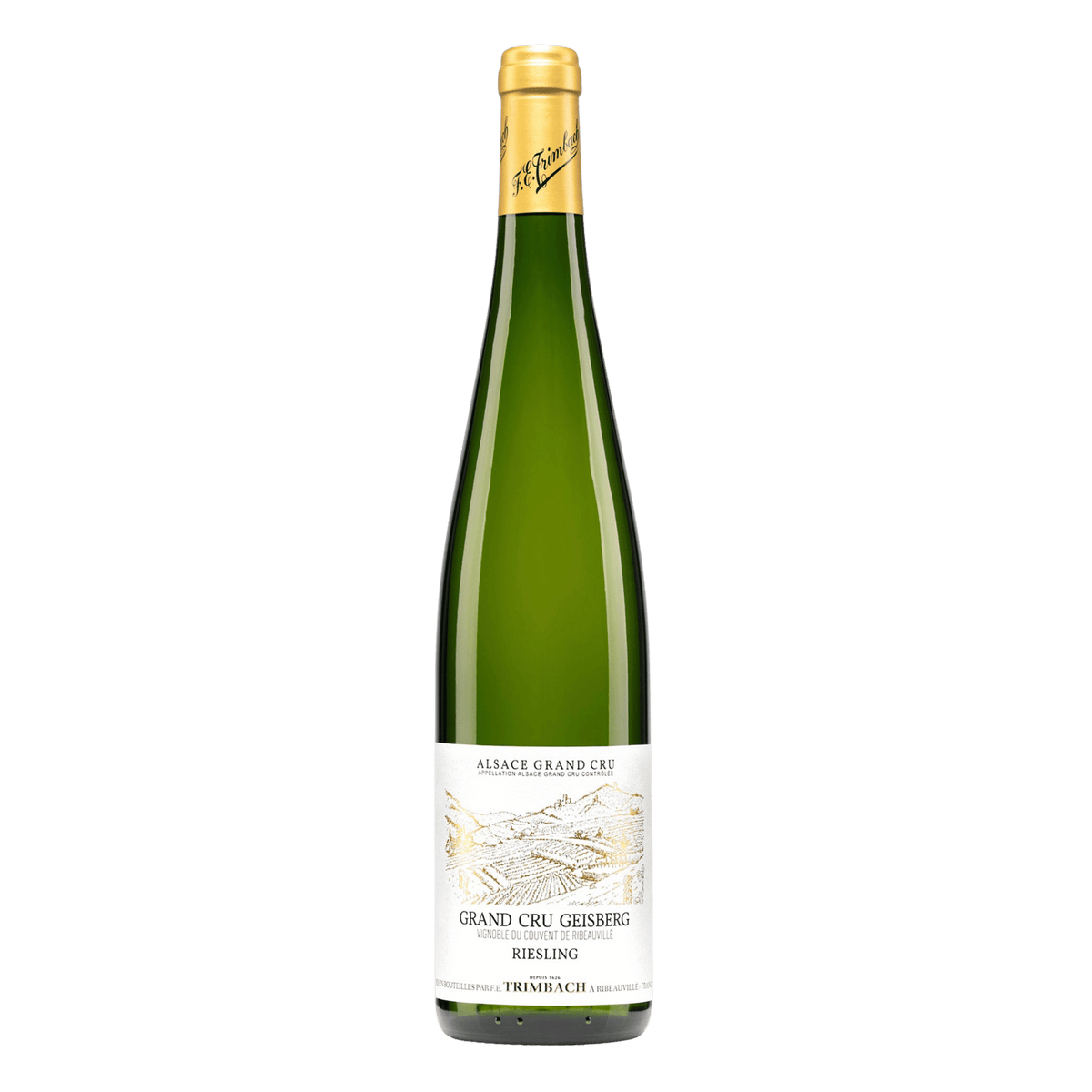
Trimbach Riesling Geisberg Grand Cru 2019
Trimbach Riesling Geisberg Grand Cru 2019
Couldn't load pickup availability
Description
Description
Trimbach Riesling Geisberg is a single grand cru bottling from the steep terraced slope above Ribeauvillé that has long supplied the house's finest Riesling.
Geisberg is a small, sharply inclined south-facing cru of roughly eight hectares, terraced on calcareous sandstone and marl, and it has been recognised as one of the best Riesling sites in Alsace since the Middle Ages. Trimbach has drawn on it for the Frédéric Emile blend for generations, and only in recent years has begun bottling a portion separately under the cru name. The wine is made exactly as the rest of the range: whole-bunch pressed, fermented cool in stainless steel, no malolactic fermentation and no oak, then aged on fine lees and held in bottle before release. Residual sugar is 1.2 grams per litre, leaving the wine entirely dry.
Steely, concentrated and very long, it suits lobster, sweetbreads and mature hard cheeses; serve at 11 to 12 degrees.
*Every effort is made to ensure the current vintage is accurate; however, variations can occur. If you are after a specific vintage, please contact us prior to ordering.
Wine Details
Wine Details
Type: White Wine
Style: Dry, full-bodied, unoaked
Grape Varietal: Riesling (100%)
Tastes Like: Comparable to a dry German Riesling Grosses Gewächs
Alcohol Percentage: 14.5%
Closure: Cork
Size: 750mL
Appellation: Alsace Grand Cru AOC (Appellation d'Origine Contrôlée), the top tier of Alsace's protected names, reserved for wine from a small number of officially classified vineyards; this one is Geisberg at Ribeauvillé, classified in 1983
Region: Alsace, France
Terroir: The Couvent de Ribeauvillé's 2.66 hectares in the Geisberg; steep south-facing terraces on limestone and sandstone
Aging: Fermented to dryness in stainless steel with no malolactic fermentation
Serving Temperature: 11 to 12°C
Winery
Winery
The Trimbach story begins in 1626, when Jean Trimbach was received as a citizen of Riquewihr and became a winegrower there. The family moved to Hunawihr in 1840, and in 1875 Frédéric Emile Trimbach won a diploma of honour at the international fair in Brussels. Since 1920 Maison Trimbach has been based in Ribeauvillé, where the twelfth and thirteenth generations of the family run it today. The family owns around 60 hectares, most of them in Ribeauvillé, Bergheim and Hunawihr, and also buys grapes from long-standing partner growers; the estate has been certified organic since 2023. The house style is famously dry and precise. The wines ferment in temperature-controlled vats, rest for several weeks on their lees and mature in stainless steel and old casks, and with the single exception of Pinot Noir they never go through malolactic fermentation, which keeps the grapes' natural acidity.
The Geisberg is a small grand cru of about eight and a half hectares, rising in steep, south-facing terraces above Ribeauvillé, and was classified in 1983. Its subsoil is limestone and sandstone. The Couvent de Ribeauvillé, a religious community in the town, entrusted its 2.66 hectares of Geisberg to Trimbach, and from the 2009 vintage the family has bottled it on its own. The house calls it the first grand cru wine it named after its terroir; before that, its Geisberg grapes went into Cuvée Frédéric Emile. The 2019 was fermented to dryness in stainless steel without malolactic fermentation.
Food Pairings
Food Pairings
Poultry: Poule au riz with sauce suprême, or roast chicken with lemon and thyme
Seafood: Steamed mud crab with ginger and spring onion
Veal: Pan-fried sweetbreads with brown butter
Vegetarian: Celeriac and potato gratin
Cheese Pairings
Cheese Pairings
Munster: The great washed-rind cheese of Alsace
Comté (24 months): Nutty and deep, a match for a powerful dry Riesling
Salers: Firm, earthy farmhouse cheese from the Auvergne
Pecorino Toscano stagionato: Savoury and firm, cut by the wine's acidity
Recipe
Recipe
Poule au Riz, Sauce Suprême (Poached Chicken with Rice and Cream Sauce)
A French family classic found in Alsace bistros too: a whole chicken poached gently with vegetables, the rice cooked in its broth and everything bathed in a velvety sauce of stock, cream and butter.
Ingredients:
- 1 free-range chicken (about 1.8 kg)
- 2 carrots, 1 leek, 1 celery stick and 1 onion studded with 2 cloves
- 1 bay leaf and 4 thyme sprigs
- 2 litres chicken stock or water
- 250 mL dry Riesling
- 300 g long-grain rice
- 40 g butter, plus 20 g extra
- 30 g plain flour
- 150 mL pouring cream
- 1 egg yolk
- Squeeze of lemon
- Salt and white pepper
Method:
- Put the chicken in a large pot with the vegetables, herbs, Riesling and stock. Bring slowly to a simmer, skim and poach very gently for 1 hour 15 minutes until cooked through.
- Ladle out 1 litre of the broth. Melt 20 g butter in a saucepan, stir in the rice, add 600 mL of the broth, cover and cook gently for 18 minutes.
- For the sauce, melt 40 g butter, stir in the flour and cook for 2 minutes. Whisk in the remaining 400 mL broth and simmer for 10 minutes.
- Whisk the cream with the yolk, stir into the sauce off the heat, warm through without boiling and finish with lemon, salt and pepper.
- Carve the chicken, set it on the rice and pour over the sauce.
Why it works: The dish is gentle and creamy. A full-bodied dry Riesling has the weight to match the sauce and the acidity to keep each mouthful fresh.