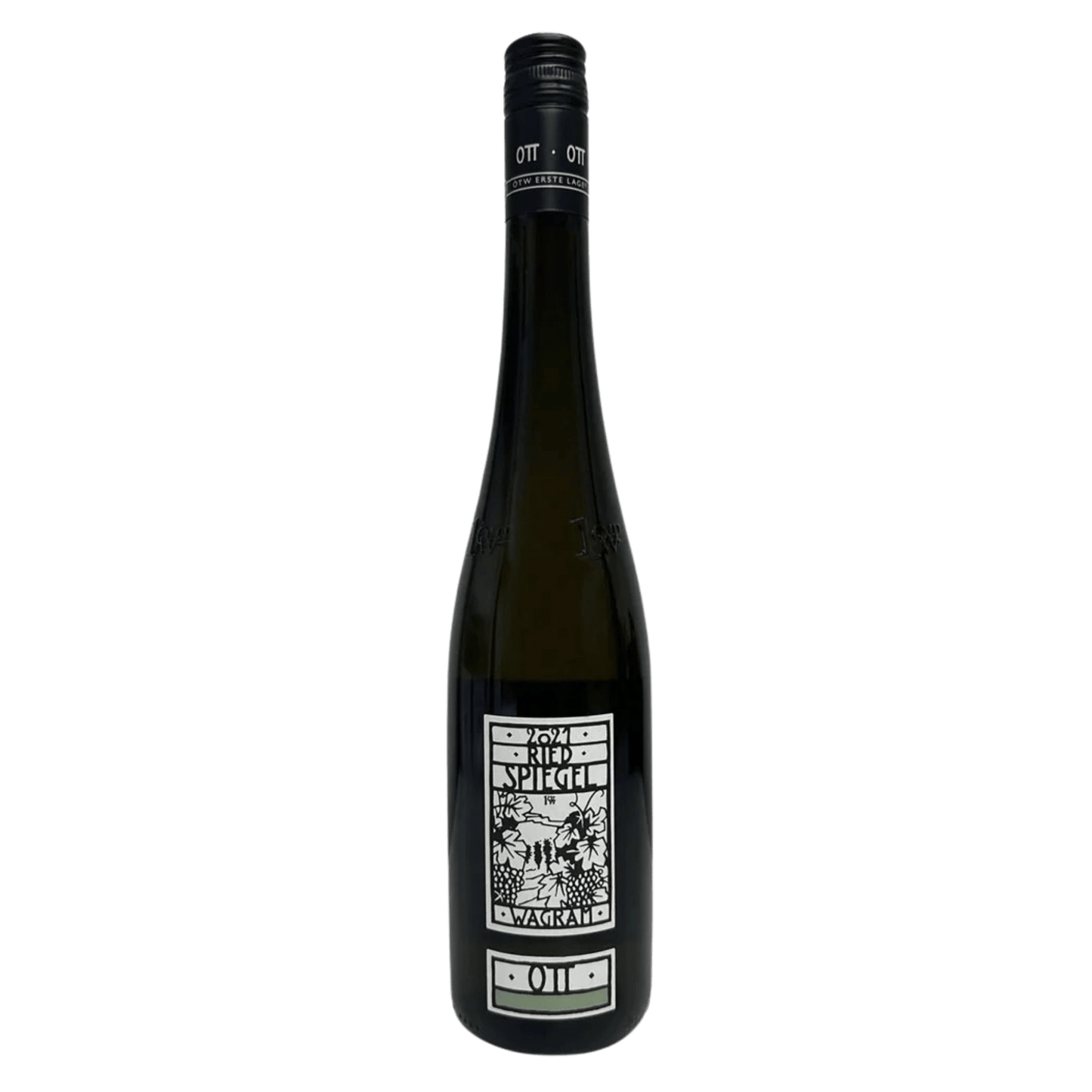
Weingut Bernhard Ott
Weingut Bernhard Ott Qvevre Grüner Veltliner 2015
Weingut Bernhard Ott Qvevre Grüner Veltliner 2015
This incredible drop is from our South Australia warehouse - please allow 7-10 days for dispatch. It's well worth the wait!
If your order includes wine from a different warehouse, everything is shipped together once this item is ready.
Couldn't load pickup availability
Description
Description
Weingut Bernhard Ott Qvevre Grüner Veltliner is made in buried Georgian clay amphorae, and has become one of the most talked about experiments in Austrian wine.
Qvevri are large egg shaped earthenware vessels, unglazed and buried to the neck in the ground, used in Georgia for several thousand years and recognised by UNESCO as part of that country's cultural heritage. Bernhard Ott, a fourth generation grower at Feuersbrunn in the Wagram, brought them into his cellar and uses them for Grüner Veltliner from the estate's loess vineyards. The fruit is hand harvested from biodynamically farmed vines, fermented spontaneously and left in extended contact with skins and lees inside the clay, with no temperature control and no oak. It is a different reading of a grape Ott has spent his career refining.
Serve a little warmer than usual, at around 12 degrees, and open it well ahead; it suits grilled meats, aged cheese and robust vegetable cooking.
*Every effort is made to ensure the current vintage is accurate; however, variations can occur. If you are after a specific vintage, please contact us prior to ordering.
Wine Details
Wine Details
Type: White Wine
Style: Dry, textured, made in clay qvevri
Grape Varietal: Grüner Veltliner (100%)
Tastes Like: For drinkers curious about amphora-made whites from Georgia and beyond
Alcohol Percentage: 13%
Size: 750mL
Region: Wagram, Lower Austria (Niederösterreich), Austria
Terroir: Loess
Aging: Destemmed into Georgian clay qvevri; spontaneous fermentation and natural malolactic fermentation in the clay
Serving Temperature: 10 to 12°C
Winery
Winery
Weingut Bernhard Ott is a family estate at Feuersbrunn on the Wagram, the long ridge of wind-blown loess on the north bank of the Danube, west of Vienna. The Ott family has grown vines on the slopes of the Hengstberg here since 1889, and Bernhard and Maria Ott run the estate today as the fourth generation; Bernhard has now made more than thirty vintages. Grüner Veltliner makes up nearly all of the plantings. The vineyards have been farmed biodynamically since 2006 and are certified by respekt-BIODYN, the Austrian biodynamic growers' association that Ott helped found. The estate belongs to the Österreichische Traditionsweingüter (ÖTW), and its classified Erste Lage (first growth) sites are Rosenberg, Spiegel and Kirchthal at Feuersbrunn and Stein at Engabrunn. Fermentations are spontaneous, and much of the range now ages on its lees in large casks from the Austrian cooper Stockinger.
Qvevri are large egg-shaped clay vessels from Georgia, buried in the ground, and Georgia's qvevri winemaking is listed by UNESCO as part of the world's intangible cultural heritage. Ott first made a Grüner Veltliner in qvevri buried in his own loess in 2009, and made the wine in a handful of vintages after that. The grapes are destemmed straight into the clay, where they ferment with their own yeasts and go through a natural malolactic fermentation, with the buried vessels keeping the temperature steady without any cooling. The wine was an experiment alongside the estate's classic Grüner Veltliners and is no longer part of its current range. 2015 was a warm year in Austria that gave full-bodied wines.
Food Pairings
Food Pairings
Hearty soups: Carinthian barley and bean stew with smoked pork
Meat: Grilled lamb chops with yoghurt and herbs
Vegetarian: Roast pumpkin and spelt salad with feta
Spiced dishes: Georgian-style chicken with walnuts and garlic
Cheese Pairings
Cheese Pairings
Alpzirler: A firm Austrian Alpine cheese, savoury enough for a textured white
Aged Manchego: Nutty and firm
Taleggio: Its washed rind meets the wine's texture
Sulguni: Georgia's own salty, stretchy cheese, a nod to the qvevri
Recipe
Recipe
Kärntner Ritschert (Carinthian Barley and Bean Stew with Smoked Pork)
Ritschert is an old one-pot dish of pearl barley, beans and smoked pork from Carinthia and Styria in southern Austria, a farmhouse stew built to feed people through the Alpine winter.
Ingredients:
- 150 g dried borlotti or cannellini beans, soaked overnight
- 150 g pearl barley, rinsed
- 500 g smoked pork hock or smoked pork belly
- 2 tbsp lard or oil
- 1 onion, finely chopped
- 2 carrots and 1/4 celeriac, diced
- 1 leek, sliced
- 2 garlic cloves, crushed
- 1 bay leaf and 1 tsp dried marjoram
- About 2 litres water or unsalted stock
- 1 tbsp cider vinegar
- Salt, pepper and chopped parsley
Method:
- Put the drained beans and smoked pork in a large pot with the water and bay leaf. Simmer, covered, for 1 hour.
- Meanwhile, soften the onion in the lard, then add the carrot, celeriac, leek and garlic and cook for 5 minutes.
- Add the vegetables and barley to the pot with the marjoram and simmer for a further 45 minutes to 1 hour, stirring now and then, until the beans and barley are tender and the stew is thick. Add more water if needed.
- Lift out the pork, remove the skin and bone, cut the meat into pieces and return it to the pot.
- Season with salt, pepper and the vinegar, scatter with parsley and serve with dark bread.
Why it works: A textured white made in clay has the grip and depth for smoked pork and earthy barley, where a lighter white would disappear.