Weingut Immich-Batterieberg
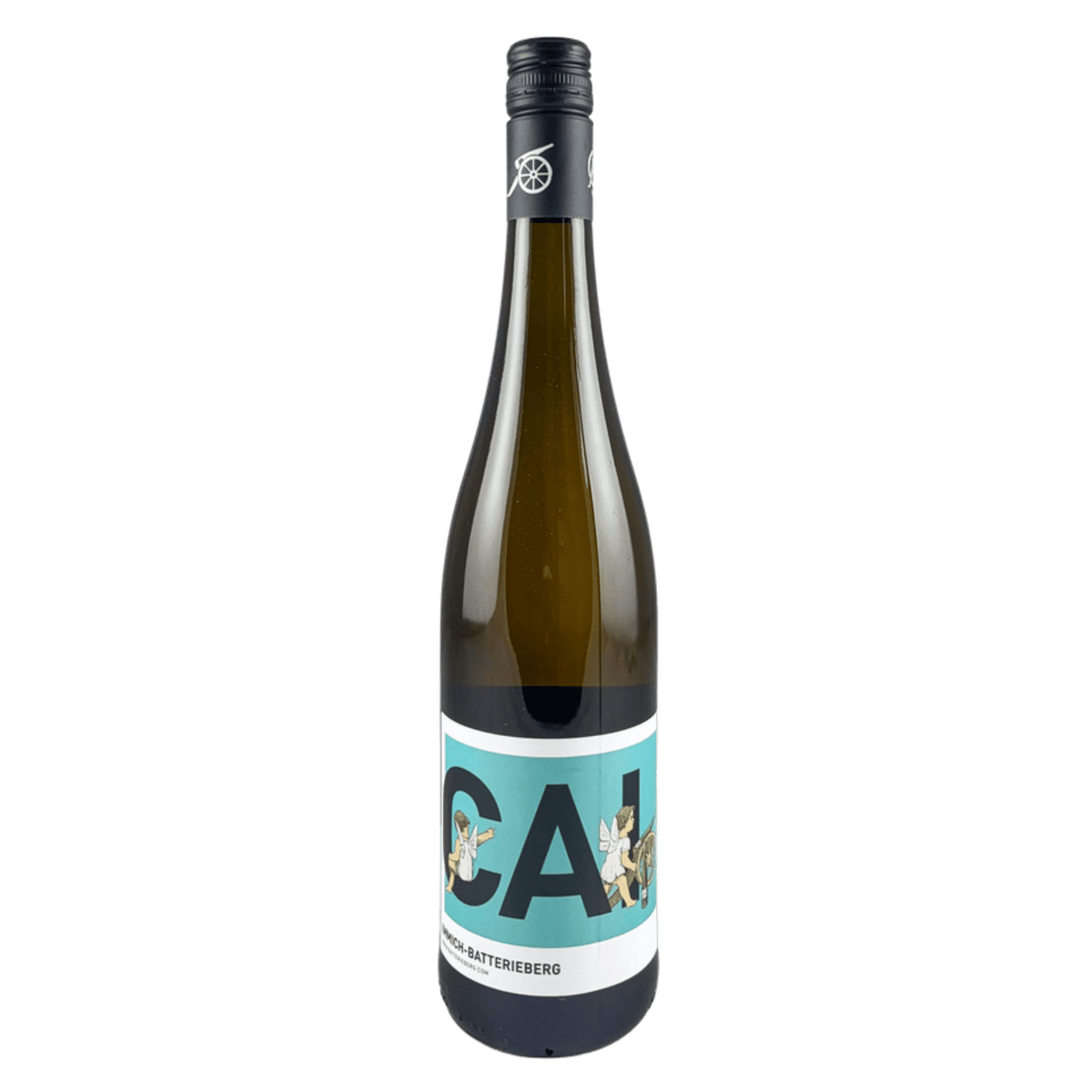
Weingut Immich-Batterieberg C.A.I. Riesling 2022
Weingut Immich-Batterieberg C.A.I. Riesling 2022
Couldn't load pickup availability
Description
Description
Weingut Immich-Batterieberg C.A.I. Riesling is a dry Kabinett-level Riesling from this historic Mosel estate, offering an accessible entry point into its terroir-driven style.
Weingut Immich-Batterieberg is a historic estate in Enkirch on the Mosel, with the Immich family cultivating vines here since 1495 and the property's own history reaching back centuries further. The estate takes its name from the Batterieberg vineyard, carved from a sheer slate cliff face using explosives between 1841 and 1845 by Carl August Immich. Since 2009 the estate has been run by winemaker Gernot Kollmann, who farms the steep, terraced vineyards organically and by hand, working with old, largely ungrafted vines and favouring spontaneous fermentation and minimal intervention in the cellar to let the region's slate soils speak clearly through the wines.
Made in the same hands-on, minimal-intervention manner as the estate's single-vineyard wines, it is a bright, food-friendly dry Riesling suited to everyday drinking and casual pairing with lighter dishes.
*Every effort is made to ensure the current vintage is accurate; however, variations can occur. If you are after a specific vintage, please contact us prior to ordering.
Wine Details
Wine Details
Type: White Wine
Style: Dry (trocken), Kabinett Trocken
Grape Varietal: Riesling
Tastes Like: A light, dry Mosel Kabinett Riesling
Alcohol Percentage: 10.5%
Closure: Screwcap
Size: 750mL
Appellation: Prädikatswein, Kabinett Trocken (Germany's top quality category, which forbids adding sugar before fermentation; Kabinett is the lightest of its ripeness levels; trocken means dry)
Region: Enkirch, Mosel, Germany
Terroir: Grapes partly from the estate's own Enkirch vines and partly bought in from the Saar and the Middle Mosel
Aging: Fermented in stainless steel with no commercial yeasts; no sugar added before fermentation (not chaptalised), which is why it carries the Kabinett name
Serving Temperature: 8-10°C
Winery
Winery
Immich-Batterieberg is one of the oldest wine estates on the Mosel, in the village of Enkirch. Its buildings first appear in a record from the year 908, and the Immich family made wine here for more than five centuries, until 1989. The estate is named after the Batterieberg vineyard, which Carl August Immich blasted out of the slate cliffs above Enkirch in the 1840s; the name comes from the blasting charges, Sprengbatterien in German. In the Prussian vineyard classification of 1868 the four Enkirch sites were placed in the highest class. Since the 2009 vintage the estate has been run by Gernot Kollmann, who previously worked at Van Volxem in the Saar. The extremely steep slopes are farmed organically and largely by hand, and a high proportion of the old vines grow on their own roots, never grafted. In the cellar there are no commercial yeasts, enzymes or fining agents, nothing is added to raise sugar or lower acidity, and the wines spend a long time on their full lees in wooden casks and stainless steel.
C.A.I. is named after Carl August Immich, the man who created the Batterieberg vineyard, and it is the estate's entry wine. The grapes come partly from the estate's own vines in Enkirch and partly from bought-in grapes from the Saar and the Middle Mosel, and the wine is fermented in stainless steel. It is labelled Kabinett Trocken: the estate uses the Kabinett name to show that no sugar was added before fermentation, and at 10.5% it is a light, dry Riesling. It suits weeknight cooking, from savoury pancakes and schnitzel to salads and fried snacks.
Food Pairings
Food Pairings
Savoury pancakes: Bacon pancakes, buckwheat galettes with ham and egg, or potato pancakes with apple sauce
Crumbed meats: Pork schnitzel with lemon, chicken schnitzel or veal cutlets
Salads: Potato salad with vinegar dressing, Wurstsalat or a green salad with radishes
Light lunches: Quiche with leek, ham sandwiches on rye or a cheese and onion tart
Cheese Pairings
Cheese Pairings
Allgäuer Emmentaler (young): A mild, elastic Bavarian cheese whose gentle weight matches a light 10.5% Kabinett
Romadur: A soft, washed-rind German cheese; the wine's acidity and low alcohol cut through its richness
Altenburger Ziegenkäse: A soft-ripened cheese from Thuringia made with goat's and cow's milk, whose fresh, tangy character suits a dry, light white
Recipe
Recipe
Speckpfannkuchen (German Bacon Pancakes)
Ingredients (Serves 4):
- 250 g plain flour
- 500 mL full-cream milk
- 4 eggs
- 1/2 tsp salt
- 200 g speck or streaky bacon, cut into thin strips
- 40 g butter, for frying
- 1 small bunch chives, snipped
- Green salad with a vinegar dressing, to serve
Instructions:
- Whisk the flour, salt and half the milk in a bowl until smooth, then whisk in the remaining milk and the eggs.
- Leave the batter to rest for 20 minutes so the flour can absorb the liquid.
- Heat a 24-26 cm non-stick frying pan over medium heat and fry a quarter of the speck for 2-3 minutes until the fat runs and the strips start to crisp.
- Add a small knob of butter, then pour in a quarter of the batter and tilt the pan so it covers the bacon in an even layer.
- Cook for 2-3 minutes until the underside is golden and the top has set.
- Flip the pancake (slide it onto a plate and turn it back into the pan if easier) and cook the other side for 2 minutes.
- Keep warm in a low oven (90°C) while you cook the remaining three pancakes the same way.
- Scatter with chives and serve with a green salad dressed with vinegar and oil.
Savoury pancakes have long been a simple main meal in German homes, and the bacon version turns up in farmhouse kitchens from the Rhineland to Bavaria. The pancakes are rich with egg and bacon fat, so they want a wine that is dry, light in alcohol and high in acidity: C.A.I. is all three, and it keeps a filling dish feeling light.