Weingut Immich-Batterieberg
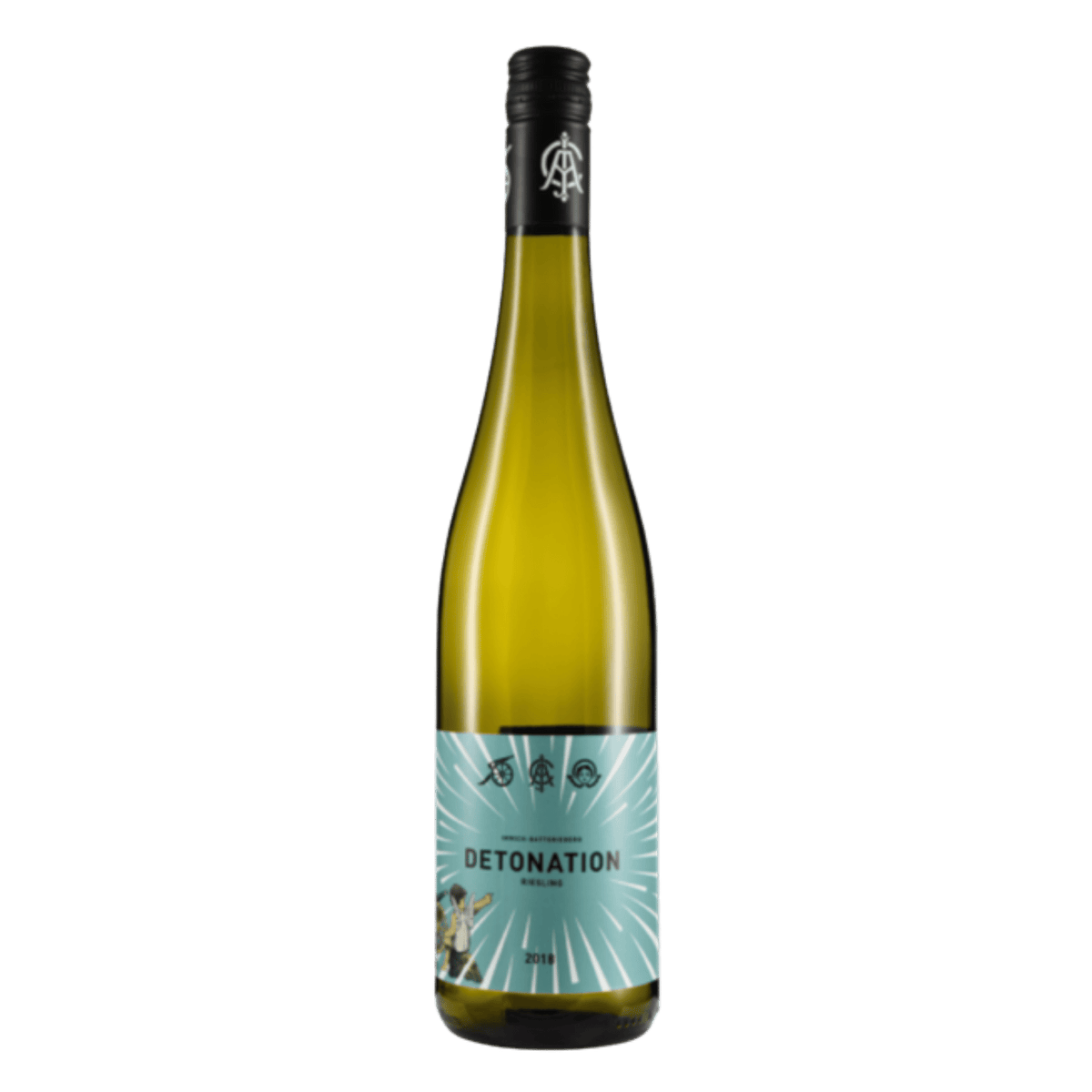
Weingut Immich-Batterieberg Detonation Riesling 2023
Weingut Immich-Batterieberg Detonation Riesling 2023
Couldn't load pickup availability
Description
Description
Weingut Immich-Batterieberg Detonation Riesling is a dry Riesling named for the dramatic 19th-century blasting of the Batterieberg cliff face that gave the estate its name and its most famous vineyard.
Weingut Immich-Batterieberg is a historic estate in Enkirch on the Mosel, with the Immich family cultivating vines here since 1495 and the property's own history reaching back centuries further. The estate takes its name from the Batterieberg vineyard, carved from a sheer slate cliff face using explosives between 1841 and 1845 by Carl August Immich. Since 2009 the estate has been run by winemaker Gernot Kollmann, who farms the steep, terraced vineyards organically and by hand, working with old, largely ungrafted vines and favouring spontaneous fermentation and minimal intervention in the cellar to let the region's slate soils speak clearly through the wines.
Reflecting the same terroir-first, minimal-intervention philosophy as the estate's single-vineyard bottlings, it is a vibrant, mineral-edged dry Riesling well suited to everyday drinking and lighter, fresh-flavoured food.
*Every effort is made to ensure the current vintage is accurate; however, variations can occur. If you are after a specific vintage, please contact us prior to ordering.
Wine Details
Wine Details
Type: White Wine
Style: Dry (trocken)
Grape Varietal: Riesling
Tastes Like: A dry Mosel Riesling from steep slate slopes
Alcohol Percentage: 11%
Closure: Screwcap
Size: 750mL
Appellation: Qualitätswein Mosel (Germany's quality wine category: grapes from one named wine region, here the Mosel, made to that category's rules)
Region: Mosel, Germany (estate based in Enkirch)
Terroir: A selection, as the producer describes it, from very poor, steep Mosel sites
Aging: Made to the estate's cellar rules: no commercial yeasts, enzymes or fining agents, nothing added to raise sugar or lower acidity, and a long time on full lees in the estate's cellar
Serving Temperature: 8-10°C
Winery
Winery
Immich-Batterieberg is one of the oldest wine estates on the Mosel, in the village of Enkirch. Its buildings first appear in a record from the year 908, and the Immich family made wine here for more than five centuries, until 1989. The estate is named after the Batterieberg vineyard, which Carl August Immich blasted out of the slate cliffs above Enkirch in the 1840s; the name comes from the blasting charges, Sprengbatterien in German. In the Prussian vineyard classification of 1868 the four Enkirch sites were placed in the highest class. Since the 2009 vintage the estate has been run by Gernot Kollmann, who previously worked at Van Volxem in the Saar. The extremely steep slopes are farmed organically and largely by hand, and a high proportion of the old vines grow on their own roots, never grafted. In the cellar there are no commercial yeasts, enzymes or fining agents, nothing is added to raise sugar or lower acidity, and the wines spend a long time on their full lees in wooden casks and stainless steel.
Detonation Riesling 2023 is a dry Qualitätswein that the estate describes as a selection from very poor, steep Mosel sites. It is made like the rest of the estate's wines, with no commercial yeasts, enzymes or fining agents and nothing added to adjust sugar or acidity. At 11% and under screwcap, it is a dry, everyday Riesling for pickled and fried fish, smoked fish platters and vinegar-dressed salads.
Food Pairings
Food Pairings
Pickled and fried fish: Fried, marinated herring, rollmops or soused sardines
Smoked fish: Smoked trout with horseradish cream or smoked mackerel on rye
Potato dishes: Fried potatoes with onion and speck, or potato rösti with sour cream
Picnic plates: Pickled cucumbers, devilled eggs and a beetroot and herring salad
Cheese Pairings
Cheese Pairings
Limburger (young): A washed-rind cheese long made in southern Germany; a dry, lower-alcohol Riesling handles its strength better than most reds
Harzer Käse: A low-fat sour-milk cheese from the Harz region, which pairs naturally with a dry wine and dark bread
Steppenkäse: A semi-firm German cheese with a supple paste that keeps the pairing simple alongside an 11% white
Recipe
Recipe
Brathering mit Bratkartoffeln (Fried Marinated Herring with Fried Potatoes)
Ingredients (Serves 4):
- 8 small whole herring, cleaned (tommy ruff, sardines or mackerel fillets work well), about 800 g in total
- 50 g plain flour, seasoned with salt and pepper
- 4 tbsp vegetable oil
- 250 mL white wine vinegar
- 250 mL water
- 2 tbsp caster sugar
- 1 tsp salt
- 2 brown onions, thinly sliced into rings
- 2 bay leaves
- 1 tsp yellow mustard seeds
- 6 black peppercorns and 4 allspice berries
- 800 g waxy potatoes, boiled in their skins the day before and peeled
- 80 g speck, diced
- 20 g butter
- 2 tbsp chopped parsley
Instructions:
- Make the marinade: bring the vinegar, water, sugar, salt, bay leaves, mustard seeds, peppercorns and allspice to the boil, add the onion rings, simmer for 2 minutes, then cool completely.
- Rinse the fish, pat dry and dust all over with the seasoned flour.
- Heat the oil in a large frying pan over medium-high heat and fry the fish for 3-4 minutes on each side (2 minutes for fillets) until golden and cooked through.
- Drain on paper towel and let cool to room temperature.
- Lay the fish in a glass or ceramic dish, pour over the cold marinade with the onions, cover and refrigerate for at least 24 hours (up to 3 days).
- For the potatoes, slice the cooked potatoes about 5 mm thick.
- Fry the speck in a large frying pan until the fat runs, add the butter and the potato slices and fry over medium heat for 10-15 minutes, turning only occasionally, until golden on both sides.
- Season with salt and pepper and scatter with parsley.
- Serve the cold herring with some of its onions alongside the hot fried potatoes.
Brathering is a classic of northern Germany's coasts, a way of keeping the herring catch by frying the fish and then preserving it in a spiced vinegar marinade. The dish is sharp with vinegar and the potatoes are fried in fat, so it needs a wine that is fully dry with high acidity of its own; Detonation is dry and only 11%, so it meets the marinade head on and cleans up after the fried potatoes.