Weingut Immich-Batterieberg
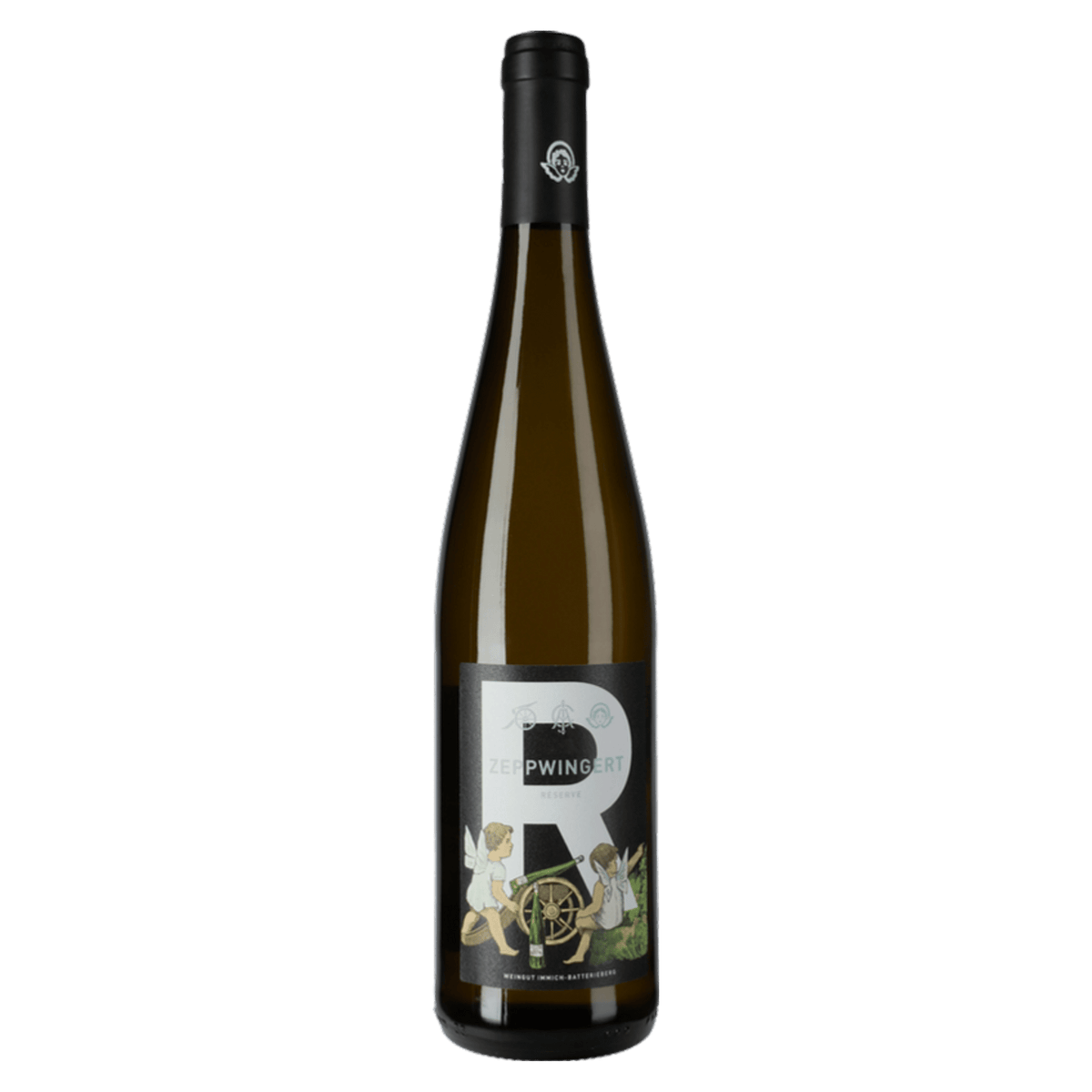
Weingut Immich-Batterieberg Zeppwingert Reserve Riesling 2023
Weingut Immich-Batterieberg Zeppwingert Reserve Riesling 2023
Couldn't load pickup availability
Description
Description
Weingut Immich-Batterieberg Zeppwingert Reserve Riesling is the estate's top selection from the Zeppwingert, a grand cru parcel of old, ungrafted vines directly beside the Batterieberg.
The Zeppwingert lies adjacent to the Batterieberg and shares its grey, quartz-flecked slate, though its darker soil gives the wines a distinct character of their own; the site is planted with old, largely ungrafted vines. Since 2009 the vineyard has been farmed organically and by hand by winemaker Gernot Kollmann, who favours spontaneous fermentation and minimal cellar intervention, selecting the Reserve bottling from the estate's best barrels of this parcel.
As the estate's top selection from this old-vine site, it is a concentrated, age-worthy dry Riesling for those seeking the fullest expression of Immich-Batterieberg's terroir.
*Every effort is made to ensure the current vintage is accurate; however, variations can occur. If you are after a specific vintage, please contact us prior to ordering.
Wine Details
Wine Details
Type: White Wine
Style: Dry (trocken)
Grape Varietal: Riesling
Tastes Like: A dry, lees-aged single-vineyard Mosel Riesling from very old vines
Alcohol Percentage: 12.5%
Closure: Natural cork
Size: 750mL
Appellation: Qualitätswein Mosel (Germany's quality wine category: grapes from one named wine region, here the Mosel, made to that category's rules), Réserve (the estate's term here for two years on full lees in a single cask)
Region: Enkirch, Mosel, Germany
Terroir: The Enkircher Zeppwingert, which surrounds the Batterieberg; dark grey slate; own-rooted (never grafted) vines over 100 years old, probably the estate's oldest
Aging: Two years on full lees in a single 300-litre cask; no commercial yeasts, enzymes or fining agents, and nothing added to raise sugar or lower acidity
Serving Temperature: 10-12°C
Winery
Winery
Immich-Batterieberg is one of the oldest wine estates on the Mosel, in the village of Enkirch. Its buildings first appear in a record from the year 908, and the Immich family made wine here for more than five centuries, until 1989. The estate is named after the Batterieberg vineyard, which Carl August Immich blasted out of the slate cliffs above Enkirch in the 1840s; the name comes from the blasting charges, Sprengbatterien in German. In the Prussian vineyard classification of 1868 the four Enkirch sites were placed in the highest class. Since the 2009 vintage the estate has been run by Gernot Kollmann, who previously worked at Van Volxem in the Saar. The extremely steep slopes are farmed organically and largely by hand, and a high proportion of the old vines grow on their own roots, never grafted. In the cellar there are no commercial yeasts, enzymes or fining agents, nothing is added to raise sugar or lower acidity, and the wines spend a long time on their full lees in wooden casks and stainless steel.
Zeppwingert Réserve Riesling 2023 comes from the Enkircher Zeppwingert, the vineyard that surrounds the Batterieberg, where own-rooted vines more than 100 years old, probably the estate's oldest, grow in dark grey slate. Réserve here means two years on full lees in a single 300-litre cask, and the wine is made dry, at 12.5%, and sealed with a natural cork. Serve it a little warmer than most whites, at 10-12°C, with slow-cooked beef, braises and hearty stews.
Food Pairings
Food Pairings
Slow-cooked beef: Gaisburger Marsch, boiled beef (Tafelspitz) with horseradish or braised beef cheeks
Swabian dishes: Maultaschen in broth, Käsespätzle with fried onions or Zwiebelrostbraten
Veal: Veal blanquette or roast veal with mushroom sauce
Root vegetables: Celeriac schnitzel, roast parsnips or a potato and celeriac mash
Cheese Pairings
Cheese Pairings
Comté (24 months): A long-aged French mountain cheese with the depth to match a Riesling given two years on its lees
Allgäuer Bergkäse (18 months): An older Allgäu mountain cheese, firm and full, suited to a structured, 12.5% white
Brie de Meaux: Soft and rich, a cheese whose weight the wine's acidity and dryness cut through cleanly
Recipe
Recipe
Gaisburger Marsch (Swabian Beef Stew with Spätzle and Potatoes)
Ingredients (Serves 4):
- 800 g beef brisket or chuck, in one piece
- 2.5 litres water
- 1 carrot, 1 small piece celeriac (about 150 g), 1 leek and 1 brown onion, halved, for the stock
- 2 bay leaves and 6 black peppercorns
- 500 g waxy potatoes, peeled and diced
- 2 carrots, diced
- For the spätzle: 300 g plain flour, 3 eggs, about 100 mL water and 1 tsp salt (or 400 g dried spätzle)
- 2 brown onions, thinly sliced
- 40 g butter
- Salt, pepper, nutmeg and 3 tbsp chopped chives
Instructions:
- Put the beef in a large pot with the water, bring slowly to the boil and skim off the foam.
- Add the halved onion, carrot, celeriac, leek, bay leaves and peppercorns and simmer gently, partly covered, for 2-2 1/2 hours until the beef is tender.
- Lift out the beef, strain the broth and season with salt and a little nutmeg. Cut the beef into bite-sized cubes.
- Cook the diced potatoes and carrots in the strained broth for 15 minutes until tender.
- Meanwhile make the spätzle: beat the flour, eggs, salt and water with a wooden spoon to a thick, smooth batter that falls slowly from the spoon. Rest 10 minutes.
- Press or scrape the batter through a spätzle maker or colander (or off a wet board with a knife) into a large pot of boiling salted water. Lift out with a slotted spoon once they float, about 2 minutes.
- Fry the sliced onions slowly in the butter for 15 minutes until deep golden.
- Return the beef to the broth with the vegetables, add the spätzle and heat through.
- Ladle into deep bowls and top with the fried onions and chives.
Gaisburger Marsch is a Swabian dish from Stuttgart, named after the city's Gaisburg district, where it was served in local inns. It is a hearty bowl of broth, beef, spätzle and potatoes, so the wine needs weight as well as acidity: two years on full lees gives the Zeppwingert Réserve the body to sit alongside the beef, while its dryness and acidity keep a filling dish from feeling heavy.